
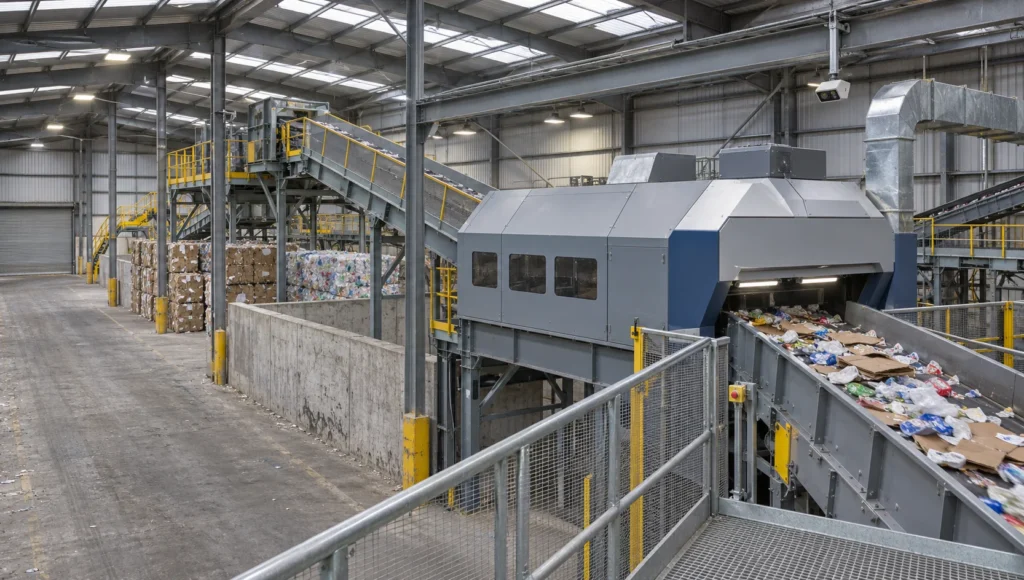
MRF Insurance: Materials Recovery Facility Cover
Operating a modern materials recovery facility involves severe physical hazards, complex mechanical systems, and stringent environmental scrutiny. Securing comprehensive MRF insurance requires plant operators to prove exceptional risk management to cautious underwriters. Insurers evaluate fire prevention controls, combustible material storage, and operational maintenance with immense precision before committing capital. A robust policy safeguards valuable sorting machinery, covers third-party liabilities, and protects cash flow when incidents disrupt processing lines across high-throughput commercial waste environments.
Historic claims across the recovery sector have hardened underwriting attitudes, driving higher deductibles, strict warranties, and restrictive indemnity conditions. Standard property policies regularly exclude the specific perils encountered when handling mixed municipal or commercial recyclables. How can facility directors structure resilient insurance programmes that satisfy statutory regulators and withstand forensic underwriting assessment?
Key Takeaways
- Underwriters demand strict adherence to formal Fire Prevention Plans to mitigate catastrophic thermal events within bulk combustible material storage areas.
- Business interruption represents the largest potential financial loss due to protracted lead times for specialist sorting optical equipment and structural rebuilding.
- Unchecked lithium-ion batteries present an acute ignition threat, requiring multi-layered detection systems, automated water deluge suppression, and robust inbound waste screening.
- Machinery breakdown policies must supplement basic property damage to cover high-speed optical sorters, ballistic separators, conveyors, and heavy industrial shredding plant.
- Specialist waste and recycling insurance brokers help operators satisfy stringent insurer warranties and present documented maintenance frameworks to secure necessary market capacity.
Core Underwriting Exposures for Recovery Facilities
Modern recovery infrastructure requires specialist risk appraisal due to dense combustible loading and intricate sorting technology. Insurers segment facility exposures across property damage, machinery disruption, and statutory liabilities. Clear risk demarcation allows operators to address specific policy warranties and maintain comprehensive operational resilience across volatile market conditions.
The matrix below highlights primary balance sheet exposures within a recovery environment. Each row pairs an operational risk area with the corresponding mitigation standard expected by corporate insurers and regulatory authorities. In practice, underwriters test every one of these controls during site surveys before releasing capacity or confirming final policy terms.
| Operational Risk Area | Primary Financial Exposure | Core Risk Mitigation Standard |
|---|---|---|
| Operational Risk AreaCombustible Stock Storage | Primary Financial ExposureTotal structural fire loss | Core Risk Mitigation StandardWISH WASTE 28 stack separation and thermal scanning |
| Operational Risk AreaAutomated Processing Line | Primary Financial ExposureMechanical breakdown and business delay | Core Risk Mitigation StandardScheduled predictive vibration analysis and OEM servicing |
| Operational Risk AreaLithium-ion Contamination | Primary Financial ExposureRapid ignition in tipping hall | Core Risk Mitigation StandardAutomated optical thermal detection and fast-acting deluge |
| Operational Risk AreaOff-Site Emissions | Primary Financial ExposureStatutory remediation orders | Core Risk Mitigation StandardComprehensive environmental impairment liability coverage |
| Operational Risk AreaMobile Plant Operations | Primary Financial ExposureFatal impact or machinery fire | Core Risk Mitigation StandardExhaust lagging, automatic engine suppression, and telematics |
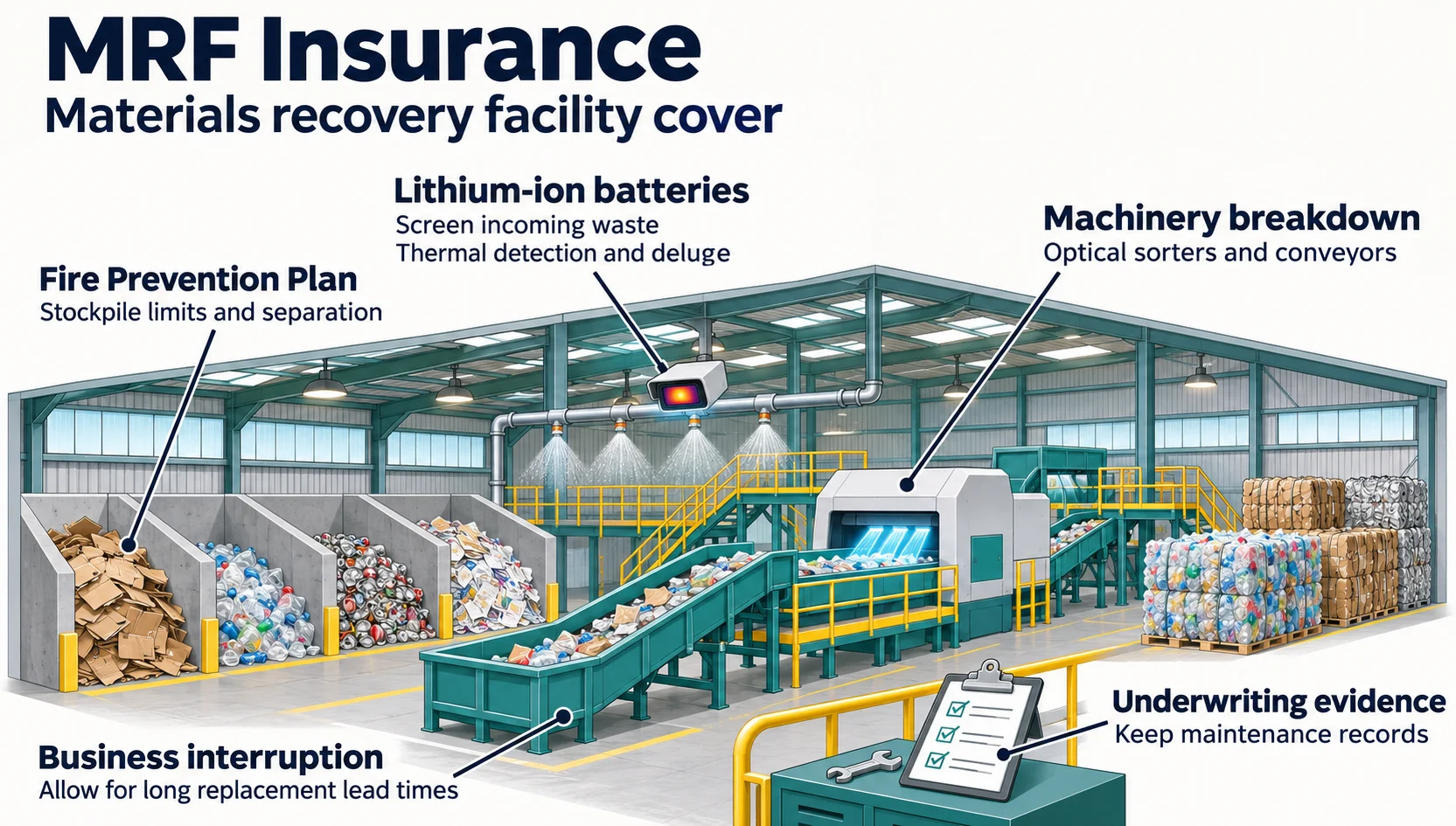
Combustible Fire Hazards in Processing Halls
Thermal Runaway and High Fire Loads
Materials recovery facilities process vast quantities of combustible paper, cardboard, plastics, and refuse-derived fuel daily. These high-density material piles create massive combustible loads capable of generating extreme heat if an ignition source emerges. Deep-seated smouldering can escalate rapidly into uncontrollable conflagrations without prompt intervention.
Underwriters focus closely on stock turnover rates, pile dimensions, and quarantine bays. Operators must prove that storage arrangements strictly limit stack heights and maintain clear aisle spacing. Segregation walls constructed from reinforced concrete help compartmentalise storage bays, restricting thermal radiation and preventing fire from spreading across adjacent processing halls.
Lithium-ion Battery Contamination Risks
Lithium-ion batteries discarded incorrectly within municipal and commercial recycling streams represent the fastest-growing ignition hazard for operators. When passed through mechanical shredders, compactors, or ballistic separators, these batteries suffer violent mechanical damage. Punctured cells experience rapid thermal runaway, instantly igniting surrounding dry paper and polymer fractions.
Effective waste and recycling insurance demands proactive contamination control protocols. Facilities must integrate continuous automated thermal imaging cameras over reception bunkers, shredder infeeds, and sorting belts. Early acoustic and infrared monitoring systems allow control teams to isolate glowing embers before contaminated material reaches the main processing line.
Did You Know?
The Environment Agency’s Fire Prevention Plans guidance for permitted waste sites, updated in January 2021, requires fire prevention measures designed so that any fire can be extinguished within 4 hours.
Fire Prevention Plans and Underwriting Demands
Regulatory Compliance and Permit Conditions
The Environment Agency in England enforces strict permit controls requiring operators to implement approved Fire Prevention Plans. Comparable obligations apply under SEPA in Scotland, Natural Resources Wales, and DAERA in Northern Ireland. Operating outside permitted parameters can jeopardise insurance protection and exposes directors to statutory enforcement action.
A compliant plan outlines maximum stockpile sizes, minimum separation distances, and managed water supplies for active firefighting. Underwriters review regulatory inspection reports and audit findings before offering terms. Failure to document routine drills, clear internal access routes, and staff emergency training creates significant obstacles during annual policy negotiations.
WISH Forum Guidance and Physical Defences
Insurers benchmark facility safety using WISH WASTE 28 guidance issued by the Waste Industry Safety and Health Forum. Underwriters expect site management to demonstrate full alignment with these industry standards. Adherence confirms that an operator approaches fire risk through technical controls rather than basic regulatory box-ticking exercises.
Required technical controls typically include dedicated water lagoons, high-volume fire pumps, automated foam monitors, and rapid-response sprinkler networks. Furthermore, mobile plant operating inside buildings must feature factory-fitted engine fire suppression systems. Insurers verify these active suppression assets through certified maintenance logs before committing underwriting capacity.
Cover Built for Demanding Businesses
Across high risk industries, the cover we arrange most often includes:
Public liability
Employers' liability
Motor fleet
Contractors' all risks
Freight liability
Professional indemnity
Environmental liability
Business interruption
Most businesses need a combination, rather than a single focus policy, and we build cover around your contracts, your workforce and your operational activities.
Plant, Machinery, and Technology Exposures
Optical Sorters and Mechanical Separation Plant
Modern recovery plants rely on automated optical sorters, near-infrared spectrometers, eddy current separators, and trommels. These sophisticated units operate continuously in abrasive, dust-laden environments subject to heavy mechanical vibration. Property damage cover alone does not address sudden internal mechanical breakdown or electrical failure.
Specialist engineering breakdown cover protects facilities against unforeseen mechanical collapse, fatigue, and sudden electronic failure. Operators must enforce structured preventative maintenance programmes aligned with manufacturer specifications. Routine oil sampling, acoustic testing, and thermographic survey reports reassure underwriters that expensive processing machinery receives adequate operational care.
Mobile Plant and Shredder Fire Risks
Wheeled loaders, telehandlers, and material handlers operate near high fire-load piles where radiator bays collect combustible dust. Slow-speed and high-speed shredders also generate high friction levels when processing resilient tramp material. Tramp metal strikes produce sparks that ignite shredded materials inside discharge chutes.
Insurers enforce strict clean-down schedules and hot-work permit procedures to mitigate mechanical friction hazards. Operators must conduct thorough daily blow-downs of mobile plant engine bays using compressed air. Fixed machinery requires magnet protection and spark suppression systems to extinguish friction ignitions before materials enter downstream conveyor ducts.
Business Interruption and Extended Recovery Periods
Extended Replacement Timelines for Specialist Machinery
Business interruption claims in the recovery sector frequently eclipse physical property losses following a major incident. Bespoke sorting screens, automated robotics, and proprietary software controls require months to manufacture, ship, install, and commission. Supply chain delays exacerbate operational downtime, threatening supplier contracts and trading viability.
Standard twelve-month indemnity periods prove grossly inadequate for complex materials recovery facilities. Rebuilding a destroyed processing hall, securing revised environmental permits, and installing turnkey sorting infrastructure frequently demands twenty-four to thirty-six months. Insurers calculate business interruption reserves based on realistic supply chain forecasts, including extended planning approval timelines.
Alternative Processing Costs and Revenue Protection
When a facility suffers structural damage, contractual commitments to accept municipal or trade waste do not cease. Operators must divert contracted tonnages to competitor transfer stations or alternative recovery processors to honour commercial agreements. Haulage surcharges, gate fees, and spot-market disposal penalties accumulate rapidly during unplanned outages.
Business interruption cover must include robust additional increased cost of working provisions to absorb waste diversion expenses. A comprehensive policy helps maintain client relationships without draining liquid cash reserves. Proper business interruption structuring safeguards gross revenue streams whilst engineering teams clear debris, rebuild premises, and commission replacement lines.
Third-Party Liabilities and Environmental Damage
Public and Employers Liability Underwriting Standards
Materials recovery facilities operate intensive transport yards, high-speed sorting picking cabins, and continuous machinery networks. These working environments present significant personal injury risks to visiting hauliers, contracted maintenance crews, and permanent sorting operatives. Public liability insurance protects against third-party injuries and damage caused by processing activities.
Employers liability remains compulsory under the Employers’ Liability (Compulsory Insurance) Act 1969, carrying a statutory minimum of £5 million per occurrence. High manual handling levels, airborne dust exposure, and heavy vehicle traffic mean underwriters scrutinise safety records. Documented risk assessments, certified protective equipment, and clear pedestrian-vehicle segregation systems maintain defensible liability positions.
Statutory Remediation and Environmental Impairment
Major fires generate massive plumes of toxic smoke and thousands of litres of contaminated firefighting run-off water. Standard commercial policies frequently exclude gradual pollution and restrict accidental contamination cover to immediate clean-up costs. Off-site contamination threatens watercourses, triggering statutory remediation enforcement under environmental regulations.
The Environmental Damage (Prevention and Remediation) (England) Regulations 2015 and devolved equivalents establish polluter-pays liability for biodiversity damage. Dedicated environmental impairment liability policies cover clean-up costs for historical, gradual, and sudden chemical release events. Adequate cover protects operators from remediation notices issued by environmental regulators following serious site incidents.
Brokerage Strategy for Waste and Recycling Cover
Risk Presentation Standards for Underwriters
Securing sustainable recycling plant insurance in a constrained market requires a strategic broking methodology. Underwriters refuse generic submission forms, demanding transparent operational data, historical loss ratios, and physical site survey evidence. A well-prepared risk presentation highlights disciplined operational management, risk mitigations, and capital investment across core physical protections.
Facility presentations must incorporate current Fire Prevention Plans, equipment maintenance logs, and thermographic inspection records. Outlining rigorous operational control separates well-run facilities from lower-tier operators who face uncompetitive pricing or outright declination. Clear risk narratives enable underwriters to assess balance sheet exposure with confidence and release competitive policy terms.
Excesses, Deductibles and Co-Insurance Terms
Hard market conditions often prevent underwriters from offering low deductibles on property damage and fire perils. Insurers increasingly demand significant excesses, sometimes reaching tens of thousands of pounds for fire or machinery claims. Operators must work with specialist brokers to structure proportional risk-sharing mechanisms that protect corporate liquidity.
Layering insurance capacity through primary and excess liability towers helps companies secure required contractual indemnity limits. Co-insurance arrangements allow multiple underwriters to share large property and interruption risks across complex recovery portfolios. Strategic broker negotiation secures workable policy terms without exposing the business to unsustainable financial volatility.
Claims Handling and Post-Loss Recovery Protocols
Initial Loss Notification and Policy Warranties
The immediate hours following an operational incident determine whether insurers accept or dispute a formal claim. Strict claims notification conditions require prompt disclosure of structural damage, environmental releases, or machinery failures. Delaying formal notification compromises forensic evidence collection and can jeopardise policy indemnity under strict notification warranties.
Insurers deploy specialist forensic investigators, loss adjusters, and environmental consultants to evaluate causation and regulatory compliance. Forensic teams inspect thermal camera logs, maintenance records, and permit documents to verify operational compliance. Maintaining digital off-site backups of operational records ensures management can prove warranty compliance during initial claims investigations.
Business Continuity and Claims Negotiation
Mitigating ongoing commercial disruption requires swift agreement with loss adjusters regarding interim business interruption settlements. Insurers expect operators to implement established business continuity plans, including waste diversion arrangements and temporary plant hire. Proactive communication ensures reasonable alternative working costs receive approval before management incurs significant external liabilities.
Dedicated claims advocacy streamlines negotiations over machinery depreciation, reinstatement values, and financial loss calculations. Professional claims specialists help operators interpret complex policy wordings and resolve technical adjustment disputes. Coordinated claims management preserves corporate cash flow, restores processing capacity, and protects enterprise value following major physical losses.
Final Thoughts
Managing physical and financial risk across materials recovery infrastructure requires technical vigilance, capital discipline, and specialist MRF insurance protection. Combustible sorting environments, machinery failure potential, and persistent lithium-ion contamination demand institutional fire safety management. Generic insurance arrangements leave balance sheets vulnerable to policy disputes, disproportionate deductibles, and punitive exclusions when catastrophic events strike.
Operators must treat insurance placement as a continuous operational partnership rather than an annual administrative task. Documenting maintenance, aligning controls with WISH standards, and structuring realistic business interruption periods secures long-term insurability. A defensible, well-engineered facility commands the underwriting confidence needed to survive industry disruptions and support sustainable resource recovery.
Speak to an Insurance Specialist
Whether you need a new quote, want to discuss your renewal or have a question about an existing policy, our team is here to help.
Frequently Asked Questions
Q: Why is business interruption insurance so critical for materials recovery facilities?
A: Business interruption insurance protects gross profits and fixed costs when fire or machinery breakdown halts operations. Recovery facilities face multi-year recovery timelines due to long lead times for bespoke optical sorters, ballistic separators, and structural rebuilding. Standard twelve-month periods leave operators unprotected when planning delays, environmental permit reviews, and installation schedules run past a single year. Furthermore, the cover absorbs costly waste diversion fees and alternative processing charges required to maintain municipal client contracts.
Q: How do lithium-ion batteries affect insurance terms for recycling plants?
A: Lithium-ion batteries significantly increase underwriting scrutiny due to their propensity to cause rapid, intense fires when crushed inside sorting equipment. Underwriters often introduce specific warranties requiring automated infrared monitoring, automated deluge systems, and inbound waste screening protocols. Non-compliance with these warranties can compromise policy validity after a fire. Demonstrating advanced thermal detection, staff intervention training, and isolated quarantine storage helps operators secure affordable terms and maintain property capacity in a restrictive market.
Q: What is the purpose of an approved Fire Prevention Plan in underwriting?
A: An approved Fire Prevention Plan demonstrates that a site complies with strict environmental permits and industry safety standards, including WISH WASTE 28 guidance. Underwriters evaluate stockpile heights, separation distances, water supplies, and thermal monitoring before quoting. Operating without an approved plan breaches permit conditions and commonly leads commercial insurers to decline the risk. Underwriters view an active, audited plan as proof of operational discipline, reducing perceived fire propagation risks across bulk combustible storage bays.
Q: Does standard property insurance cover automated machinery breakdown?
A: Standard property policies exclude internal mechanical or electrical breakdown, covering physical damage only when caused by external perils such as fire, flood, or impact. Materials recovery facilities rely on high-speed moving machinery that suffers wear, fatigue, and electrical failure. Dedicated engineering breakdown insurance is essential to cover sudden, unforeseen mechanical failures in shredders, optical sorters, and drive motors. This coverage bridges policy gaps, funding component replacement and repair costs without delay.
Q: What environmental liability risks do recovery facility operators face?
A: Operators face extensive environmental liabilities from toxic smoke plumes, chemical spills, and contaminated firefighting water runoff that reaches surrounding soils or watercourses. Standard public liability policies usually restrict coverage to sudden and accidental pollution events, excluding statutory clean-up orders and gradual contamination. Under the Environmental Damage (Prevention and Remediation) Regulations, authorities can mandate costly environmental restoration. Standalone environmental impairment liability insurance funds mandatory clean-up, legal defence fees, and biodiversity remediation costs effectively.
About The Author
Darren Judd
Director, Co-Founder and Co-Owner of Capital Corporate Risks Ltd

Experienced Account Executive with a demonstrated history of working in the insurance industry. Skilled in Account Management, Risk Management, Business Development across all classes of insurance within the Construction Industry,