
Engineering Risk Cover: A Practical Guide
Operating heavy machinery and delivering structural infrastructure carries severe operational hazards that standard commercial property policies exclude. A sudden electrical burnout in a generator or mechanical failure in an excavator can halt an entire project within seconds. Securing robust engineering risk cover protects organisations from sudden, unforeseen physical damage, machinery breakdown, and associated business disruption. This specialised protection safeguards expensive assets and preserves operational solvency across groundworks programmes and infrastructure construction sites.
Engineering projects face stringent regulatory examination alongside contract conditions that mandate comprehensive insurance before works commence. How can engineering businesses structure their policies to ensure statutory compliance whilst protecting against plant failure and catastrophic site losses?
Key Takeaways
- Specialised engineering policies protect machinery against internal mechanical breakdown and sudden electrical failure that commercial property forms routinely exclude.
- Statutory inspection services fulfil mandatory obligations under British safety legislation whilst validating underlying engineering property and liability covers.
- Plant and machinery policies address substantial financial obligations for hire fees that accumulate when leased equipment sustains accidental damage.
- Combining works protection with plant breakdown creates a cohesive defensive shield against severe financial disruption during complex civil infrastructure schemes.
- Engineering policies establish resilient operational foundations by securing mechanical integrity and maintaining defensible records for regulatory inspection regimes.
Core Components of Engineering Asset Protection
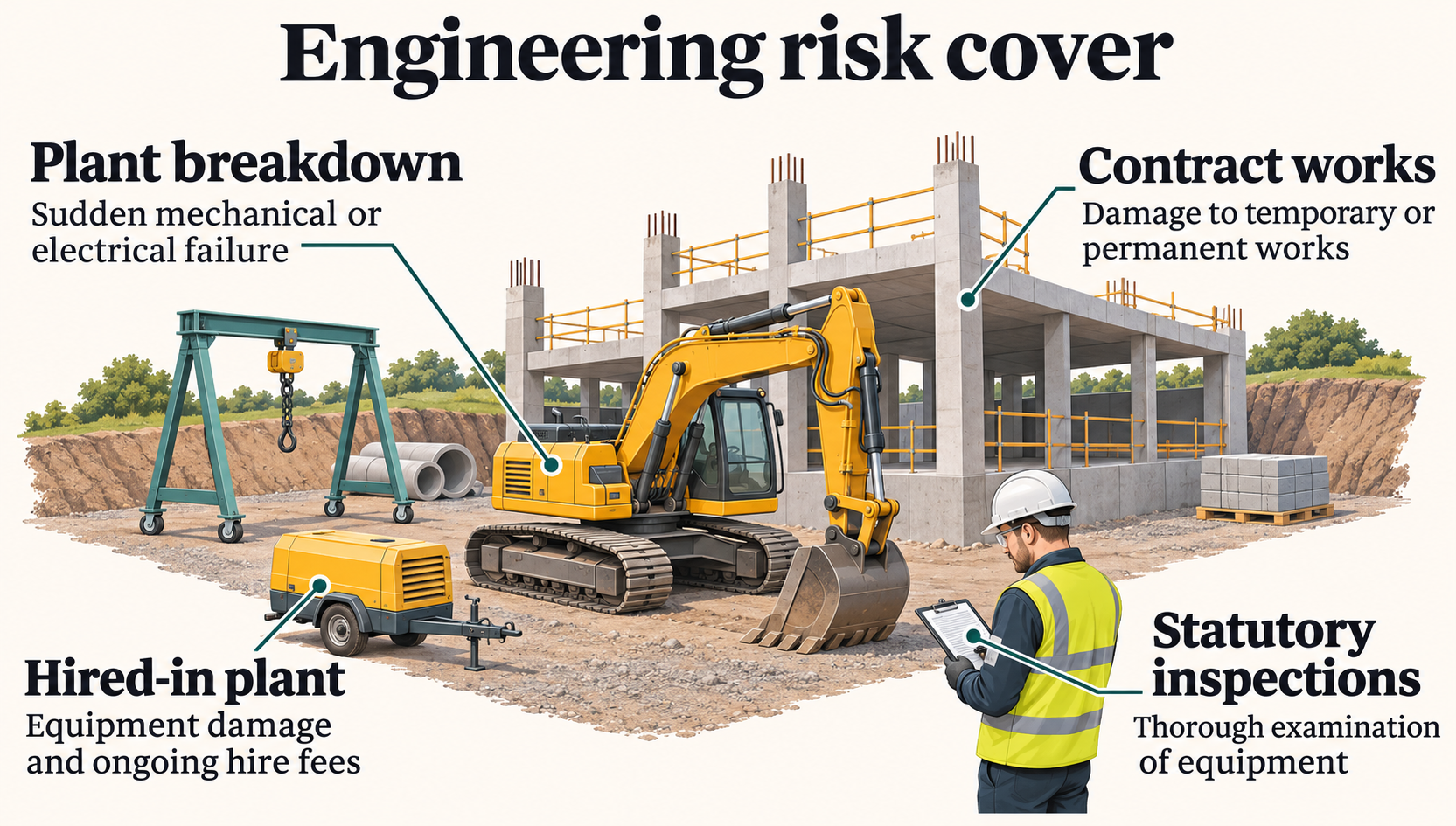
Technical projects require insurance programmes that respond directly to mechanical, electrical and structural hazards. Standard commercial property policies frequently exclude internal mechanical failure, derangement and pressure explosion. Dedicated engineering covers close those gaps. They sit alongside the works and liability sections rather than replacing them. Each responds when the machinery itself causes the loss.
The table below sets out the main insurance mechanisms used across technical and industrial operations. It states the operational function of each one. It also names the regulatory or contractual framework that governs its use. Read it as a planning tool when scoping cover for a specific contract, plant fleet or pressure installation.
| Policy Mechanism | Operational Function | Governing Standard |
|---|---|---|
| Policy MechanismEngineering Breakdown | Operational FunctionCovers sudden mechanical or electrical failure | Governing StandardPUWER 1998 |
| Policy MechanismContract Works | Operational FunctionProtects permanent and temporary works on site | Governing StandardJCT / NEC4 Contracts |
| Policy MechanismStatutory Inspection | Operational FunctionMandatory independent examination of equipment | Governing StandardLOLER 1998 / PSSR 2000 |
| Policy MechanismHired-in Plant | Operational FunctionCovers liability for leased equipment and hire fees | Governing StandardCPA Model Conditions |
| Policy MechanismEnvironmental Liability | Operational FunctionProtects against gradual or acute site pollution | Governing StandardEPA 1990 |
Mechanical Breakdown and Sudden Damage Exposures
Internal Mechanical Derangement Risks
Internal mechanical derangement involves catastrophic mechanical failure that occurs without external impact or obvious foreign interference. Standard commercial property insurance routinely excludes this specific peril. Engineering breakdown insurance covers the repair or replacement costs when internal components fracture, seize, or suffer sudden mechanical fatigue during normal operational use.
Modern equipment relies on tight manufacturing tolerances and complex hydraulic systems. When an internal bearing disintegrates or a crankshaft snaps, the resulting operational stoppage causes immediate project delays. In practice, we find bearing and gearbox failures account for most breakdown claims on long-hire plant. Specialist engineering policies respond to these sudden physical losses. They provide the financial resources needed to source replacement components quickly.
Electrical Burnout and Power Surge Hazards
Electrical breakdown covers sudden damage caused by electrical arcing, insulation failure, short circuits, or voltage fluctuations within machinery. These incidents instantly ruin sensitive control panels, variable speed drives, and heavy electric motors. Without tailored cover, policyholders face total asset write-offs and substantial secondary replacement costs.
High-voltage equipment and automated control systems remain vulnerable to power spikes and internal wiring degradation. Dedicated policies cover the physical rebuilding of damaged motors and electrical switches. Insurers also support the technical diagnostic labour required to verify system integrity before restarting major industrial equipment.
Did You Know?
Under LOLER 1998, lifting equipment used to lift people must undergo thorough examination at least every six months. The same six-month interval applies to lifting accessories such as chains, slings and shackles. All other lifting equipment requires examination at least every twelve months. A written examination scheme drawn up by a competent person may set a different interval.
Statutory Inspection Regimes and Safety Obligations
Lifting Equipment Thorough Examination Rules
The Lifting Operations and Lifting Equipment Regulations 1998 mandate periodic thorough examinations of lifting apparatus by independent competent persons. This statutory duty applies to cranes, hoists, excavators used as cranes, and mobile elevating work platforms. Engineering inspection contracts provide accredited engineer-surveyors who conduct these necessary checks to maintain lawful operation.
Failure to produce valid inspection certificates exposes site operators to HSE enforcement notices. It also exposes them to potential criminal prosecution under the Health and Safety at Work etc. Act 1974. Engineering inspection policies streamline this process by scheduling periodic surveys. Engineer-surveyors issue detailed reports highlighting defects, required repairs, and operational timelines to prevent industrial accidents.
Pressure Systems Written Schemes and Compliance
The Pressure Systems Safety Regulations 2000 require dutyholders to establish a written scheme of examination before operating relevant pressure systems. This requirement covers steam boilers, air receivers, and associated pressurised pipework. Engineering insurers deploy qualified surveyors who inspect the plant and validate the operating parameters specified in the written scheme.
Operating a pressurised vessel without a certified examination scheme constitutes a direct breach of British safety law. Boiler failure carries immense explosive potential, threatening worker life and structural integrity. Surveyors evaluate vessel wall thickness and test safety relief valves. They also examine protective instrumentation to ensure continuous safe operation across commercial sites.
Cover Built for Demanding Businesses
Across high risk industries, the cover we arrange most often includes:
Public liability
Employers' liability
Motor fleet
Contractors' all risks
Freight liability
Professional indemnity
Environmental liability
Business interruption
Most businesses need a combination, rather than a single focus policy, and we build cover around your contracts, your workforce and your operational activities.
Contract Works and Infrastructure Protection
Material Damage Cover for Works in Progress
Contractors all risks insurance provides comprehensive material damage protection for temporary and permanent construction works throughout the project lifecycle. This policy protects unfinished infrastructure against fire, flood, storm damage, malicious acts, and site collapse. The protection remains in place from site possession until formal practical completion handovers occur.
Civil projects frequently face environmental and weather exposures that threaten physical works. Unfinished bridge foundations, road realignments, and retaining walls remain vulnerable to severe surface runoff or earth movement. Contract works insurance covers the re-excavation, material replacement, and labour expenses necessary to reconstruct damaged sections without draining working capital.
Contractual Obligations Under JCT and NEC Frameworks
Standard construction agreements, including the NEC4 suite and JCT contracts, require contractors to secure specified works and plant protection. In civil engineering insurance, aligning coverage parameters with contract clauses prevents costly disputes. Failure to maintain compliant insurance constitutes a fundamental contract breach, triggering potential termination or site eviction.
NEC4 Option X clauses and JCT joint-names provisions demand exact insurance structures that name the employer alongside the principal contractor. Brokers verify that policy endorsements waive subrogation rights against contracted parties. Maintaining compliant documentation avoids formal contract default and ensures seamless claim settlements following major insured site incidents.
Plant Fleet Management and Hired Equipment Liabilities
Owned Machinery Accidental Damage and Theft
Heavy machinery represents a significant capital investment that demands specialised physical loss and theft insurance. Plant insurance policies protect excavators, dump trucks, and piling rigs working on active sites or resting in storage yards. Comprehensive policies cover physical impact damage, overturn incidents, malicious mischief, and total machine loss.
Plant theft remains a persistent threat across UK infrastructure projects. Excavators and compact plant attract organised criminal networks due to high resale values and equipment portability. Insurers mandate robust physical security, including CESAR markings, GPS telematics, and perimeter fencing. They settle replacement claims swiftly once those security layers are shown to have been breached.
Contractual Liabilities Under CPA Hire Conditions
Hiring equipment under Construction Plant-hire Association model conditions shifts responsibility for plant loss and continuing hire charges onto the customer. When a hired excavator suffers damage, the contractor must pay repair expenses whilst continuing weekly hire payments. Hired-in plant cover absorbs these severe compounding financial liabilities completely.
Continuing hire charges often exceed the actual physical repair value of the damaged machine during extended supply chain delays. From experience across the sector, those charges cause more disputes than the repair invoice itself. Standard plant covers without dedicated hire extensions leave firms exposed to substantial invoices from plant hire companies. Broker-negotiated clauses ensure policies indemnify both the physical damage and accrued hiring debts.
Underground Hazards and Groundworks Risks
Services Strikes and HSG47 Operational Guidance
Ground excavation carries significant operational hazards, particularly regarding inadvertent utility strikes on buried electricity cables, gas mains, and fibre assets. The Health and Safety Executive outlines strict utility detection protocols within HSG47 guidance. Public liability policies require adherence to these safe digging practices to maintain valid insurance indemnity.
Striking an underground electrical cable or high-pressure gas main causes catastrophic injuries, widespread outages, and substantial third-party compensation claims. Insurers assess whether site teams deployed electromagnetic locators and consulted utility mapping through services such as LSBUD. They also check whether crews executed hand-dug trial holes. Demonstrating strict procedural compliance protects the contractor against allegations of gross negligence.
Piling and Vibration Damage to Surrounding Properties
Piling and deep underpinning operations transmit ground vibrations that can induce settlement, plaster cracking, and structural movement in neighbouring properties. Standard liability policies often restrict claims arising from ground consolidation or vibration. Contractors require tailored endorsements that cover non-negligent damage and third-party property damage arising from groundworks.
Neighbouring property owners frequently issue legal challenges under the Party Wall etc. Act 1996 following structural piling operations. Securing specialised liability extensions ensures legal defence costs and settlement funds remain available. Pre-commencement structural condition surveys establish objective baseline data. That evidence defends contractors against historic defects falsely attributed to current engineering activities.
Environmental Impairment and Site Contamination
Sudden and Accidental Pollution Within Public Liability
Standard public liability insurance usually covers environmental pollution only when caused by a sudden, unintended, and unexpected operational incident. A ruptured hydraulic hose spraying oil into a storm drain represents a typical sudden incident. Such clauses exclude gradual emissions, long-term site seepage, and historical ground contamination discovered during excavation works.
When sudden spills occur, immediate environmental containment prevents toxic migration into waterways and protected ecosystems. Standard liability endorsements fund emergency surface containment and basic disposal expenses. However, statutory regulatory bodies hold extensive enforcement powers that extend far beyond initial clean-up measures. Those powers expose contractors to substantial statutory liabilities.
Statutory Clean-Up and Environmental Impairment Policies
The Environmental Damage (Prevention and Remediation) (England) Regulations 2015 hold commercial operators strictly liable for preventing and remediating environmental harm. Dedicated environmental impairment liability policies fund compulsory regulatory clean-up notices, legal representation, and ecosystem remediation. This specialised cover protects engineering businesses from ruinous costs when works disturb hazardous substances.
The Environment Agency exercises wide legal authority to compel responsible parties to remediate damaged habitats, wetlands, and contaminated aquifers. Standard public liability extensions explicitly exclude statutory remediation orders where no direct third-party property damage occurred. Environmental impairment policies indemnify operators against primary, complementary, and compensatory remediation ordered by environmental regulators.
Engineering Protection Matched to Project Requirements
Main Contractor Insurance Flow-Downs
Main contractors routinely impose extensive insurance requirements on specialist engineering subcontractors within procurement packages. These flow-down provisions frequently demand elevated indemnity limits, specialised plant breakdown provisions, and joint-names endorsements. Contractors must review contract documents rigorously to ensure existing policies satisfy every mandated requirement before starting work on site.
Operating with deficient insurance levels breaches commercial agreements and risks financial exposure if uninsured incidents take place. When operating in this area, pre-start documentation decides how quickly an insurer accepts a claim. High-hazard infrastructure contracts frequently require excess layer liability above primary limits. Specialist brokers review subcontract schedules, aligning commercial terms and securing required endorsements before equipment arrives on site.
Continuous Risk and Maintenance Audit Records
Insurance validity relies heavily on strict compliance with routine equipment servicing, manufacturer guidelines, and statutory inspection requirements. Policy conditions and statutory provisions mandate that operators exercise reasonable care to maintain plant in sound working order. Rigorous maintenance tracking creates an auditable record that protects policy indemnity when mechanical claims arise.
Modern telematics and digital fleet management systems streamline ongoing compliance by recording machinery hours, maintenance interventions, and operator usage data. When catastrophic mechanical failures occur, insurers review service histories before approving payouts. Transparent, up-to-date maintenance records prove proper operational care. That evidence eliminates common disputes during high-value insurance claims.
Final Thoughts
Managing high-hazard operations requires a structured approach to engineering risk cover that addresses mechanical failures, regulatory obligations, and contractual responsibilities. Statutory inspection duties under LOLER 1998 and PSSR 2000 sit alongside material damage policies. Balancing both establishes operational resilience across demanding technical sectors. Thorough risk identification and regular policy reviews keep plant, temporary works, and personnel protected throughout changing project conditions.
As engineering techniques evolve and civil infrastructure schemes grow more complex, insurance arrangements must keep pace with operational reality. Documented risk management systems, verified equipment inspection routines, and tailored coverage limits preserve balance sheets. Together they support long-term commercial delivery across the engineering industry.
Speak to an Insurance Specialist
Whether you need a new quote, want to discuss your renewal or have a question about an existing policy, our team is here to help.
Frequently Asked Questions
Q: What is the main difference between plant breakdown and standard property insurance?
A: Standard property insurance covers losses from external perils such as fire, flood, storm or vehicle impact. It routinely excludes internal mechanical breakdown, electrical failure and fatigue derangement. Engineering breakdown cover responds to internal operational failures instead. It pays for component replacement, electrical repairs and specialist labour when machinery seizes or fractures during ordinary use. In practice, most plant losses on active sites fall into one category or the other. Holding both policies removes the gap between them.
Q: Why do contractors require statutory engineering inspections alongside insurance?
A: Statutory inspections are mandatory legal duties under British health and safety law, including LOLER 1998 and PSSR 2000. Competent, independent persons must carry out these examinations and certify the equipment. Valid certificates also act as condition precedents within engineering insurance policies. Without them, insurers can decline a claim following a workplace accident or a plant failure. From experience across the sector, insurers request inspection records before settling any significant machinery loss. Compliance and insurable interest therefore run together.
Q: What liabilities do CPA Model Conditions impose on equipment hirers?
A: Under standard Construction Plant-hire Association conditions, the customer carries full legal responsibility for hired equipment from delivery until collection. Hirers must indemnify the owner for repair or replacement costs. They must also pay continuing hire charges throughout the repair period. Those charges often exceed the physical damage figure during long parts delays. Hired-in plant insurance covers both exposures. It also meets the owner’s loss of revenue where the contract requires it.
Q: Does contractors all risks insurance cover plant mechanical breakdown?
A: Contractors all risks insurance protects temporary and permanent works against external accidental damage. Typical insured perils include fire, storm, flood, impact, theft and collapse. The policy does not cover internal mechanical breakdown or electrical failure within plant and machinery. Those losses need a separate engineering breakdown policy or an endorsement to the plant section. Contractors running generators, cranes or pumps on site should confirm which document carries the breakdown risk before works begin.
Q: How does HSG47 compliance affect public liability insurance during groundworks?
A: HSG47 sets out Health and Safety Executive guidance on locating and avoiding buried services during excavation. Insurers expect groundworks contractors to follow it in full. That means obtaining utility plans, using cable avoidance tools and digging trial holes by hand. Records of those steps matter after a strike. Clear evidence of compliance demonstrates reasonable care and supports the defence of third-party claims. Weak records invite allegations of negligence and can prompt insurers to question whether policy conditions were met.
About The Author
Darren Judd
Director, Co-Founder and Co-Owner of Capital Corporate Risks Ltd

Experienced Account Executive with a demonstrated history of working in the insurance industry. Skilled in Account Management, Risk Management, Business Development across all classes of insurance within the Construction Industry,