
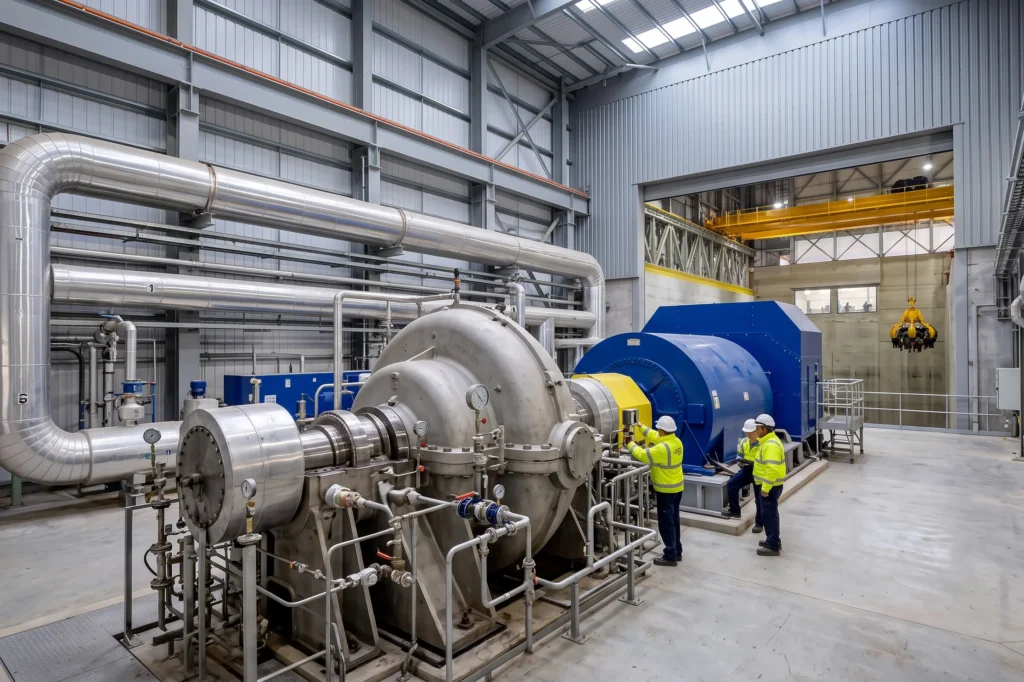
Waste To Energy Insurance: UK EfW Operator Cover
An energy recovery facility is a power station with a waste hall attached, and it carries the risks of both. Waste to energy insurance has to cover a combustion line, a turbine set, a permitted environmental process and a contracted electricity supply at the same time. Few standard policies attempt it.
Most operators discover the shortfall at claim stage, when the indemnity period expires with the plant still down. So how should an EfW operator structure property, breakdown, environmental and business interruption cover to match how the site actually runs?
Key Takeaways
- Energy recovery plants are underwritten as power generation risks, not as waste sites, and the survey reflects that.
- Fire in the bunker remains the dominant property loss driver, and insurers impose conditions precedent rather than recommendations.
- Engineering breakdown responds to sudden mechanical or electrical failure that a property section simply does not cover.
- Environmental impairment liability funds gradual pollution and on-site remediation that public liability wordings exclude entirely.
- A twelve-month indemnity period rarely survives a serious loss, so thirty-six months is a defensible baseline.
Cover Classes Required Across An Energy Recovery Site
Most operators build their programme from five distinct cover classes rather than a single combined policy. Each responds to a different trigger. Property answers physical damage, breakdown answers mechanical failure, environmental answers pollution, business interruption answers lost revenue, and liability answers third-party injury claims brought against the operator.
The table below sets out what each class protects and the exposure it addresses. Gaps usually appear between classes rather than inside them. In practice, we find the sharpest disputes concern whether a loss counts as damage or breakdown, so wordings should dovetail deliberately at placement.
| Cover Class | What It Protects |
|---|---|
| Material Damage | Combustion line, boiler house, turbine hall, waste bunker and flue gas treatment plant |
| Engineering Breakdown | Turbines, generators, pressure vessels, pumps, fans and electrical switchgear |
| Business Interruption | Gate fee income, electricity export revenue, heat offtake and continuing fixed overheads |
| Environmental Impairment Liability | Gradual and sudden pollution, plus on-site and off-site remediation costs |
| Public and Products Liability | Third-party injury and property damage claims arising from site operations |

How Energy Recovery Cover Differs From Standard Waste Policies
Thermal Processing Raises The Risk Profile
Energy recovery plants burn residual waste above 850 degrees Celsius and export electricity to the national grid. That combination produces exposures a transfer station never encounters. High-pressure steam systems, continuous running, and firm grid connection obligations all sit outside the scope of ordinary waste management policy wordings.
In practice, we find underwriters treat these sites as power generation risks first and waste risks second. The survey questions reflect that. Expect detailed scrutiny of boiler maintenance records, turbine condition monitoring, and the waste acceptance protocol.
Where Standard Waste Wordings Fall Short
Ordinary commercial combined policies cap material damage limits far below the reinstatement value of a combustion line. They rarely extend to machinery breakdown on rotating plant. Indemnity periods stop at twelve months. Pollution cover is restricted to sudden and accidental events, leaving gradual emissions exposures completely uninsured.
Each gap becomes visible only at claim stage. By then the operator carries the shortfall. A specialist schedule addresses all four weaknesses at placement rather than after a loss.
Fire And Property Damage At Thermal Recovery Plants
Refuse-Derived Fuel Storage And Ignition Sources
Fire remains the dominant property loss driver across the energy from waste sector. Bunker stockpiles hold thousands of tonnes of combustible material. Lithium-ion cells arriving in the residual stream ignite without warning. Self-heating within deep piles adds a second, slower ignition route that operators frequently underestimate.
Grab crane operators act as the first line of defence. Thermal imaging over the bunker gives early warning. Deluge cannons and inert gas systems limit spread once ignition occurs.
Underwriter Warranties On Fire Protection
Property cover at these sites arrives with conditions precedent rather than recommendations. Insurers require an approved Fire Prevention Plan, documented hot work permits, and controlled stockpile dimensions. Failure to maintain an agreed suppression system can void a material damage claim outright, regardless of the ignition source.
Review every warranty before binding. Some wordings demand bunker clearance within a set period during shutdown. Others fix maximum pile heights. Operational teams must know these figures, not just the broker.
Did You Know?
Breaching an environmental permit condition is a criminal offence under the Environmental Permitting (England and Wales) Regulations 2016. On conviction on indictment, an operator faces an unlimited fine, and an individual can receive a prison sentence of up to five years.
Engineering Breakdown And Lost Generation Revenue
Turbine And Boiler Failure Exposures
Steam turbines run at high rotational speed under sustained thermal load. Blade erosion, bearing failure or minor shaft misalignment can destroy a machine within seconds. Boiler tube leaks force an unplanned outage. Each event stops electricity export immediately and removes the primary revenue stream from the site.
Gate fee income also suffers. Waste cannot be accepted once the bunker fills and the line stays down. Diversion costs to third-party facilities mount quickly.
What Breakdown Policies Actually Pay For
Engineering breakdown responds to sudden and unforeseen mechanical or electrical failure. That trigger sits outside the perils listed on a property section. Cover extends to specialist repair labour, expedited freight for replacement rotors, and temporary plant hire. Consequential loss follows through the business interruption section.
Check the defects exclusion carefully. Many wordings exclude the defective part itself while covering resultant damage. On a turbine set that distinction carries a seven-figure difference.
Cover Built for Demanding Businesses
Across high risk industries, the cover we arrange most often includes:
Public liability
Employers' liability
Motor fleet
Contractors' all risks
Freight liability
Professional indemnity
Environmental liability
Business interruption
Most businesses need a combination, rather than a single focus policy, and we build cover around your contracts, your workforce and your operational activities.
Statutory Inspection Duties Under PSSR 2000 And LOLER 1998
Written Schemes Of Examination For Pressure Plant
The Pressure Systems Safety Regulations 2000 require a written scheme of examination for boilers, steam pipework and associated protective devices. A competent person must draw up or certify that scheme. Examinations then follow the stated intervals. Operating outside those dates breaches both the regulations and most policy conditions.
Most engineering insurers supply the inspection service alongside the cover. Scheduling matters on a continuously running plant. Examinations are normally planned around the annual maintenance outage.
Lifting Equipment In The Waste Hall
Grab cranes, hoists and ash handling equipment fall under the Lifting Operations and Lifting Equipment Regulations 1998. Thorough examination runs at twelve-month intervals for equipment not lifting people, and six months where it does. Accessory chains and slings require the same six-monthly discipline across the site.
Records must be retained and produced on request. Environment Agency officers and insurer surveyors both ask for them. Gaps in the examination history weaken any subsequent breakdown claim.
Environmental Impairment Liability And Permit Compliance
Gradual Pollution Falls Outside Public Liability
Public liability wordings typically restrict pollution cover to sudden, identifiable and accidental incidents. Stack emissions, leachate migration and slow soil contamination fail that test. Environmental Impairment Liability closes the gap. It responds to gradual conditions and funds on-site remediation that a liability section normally excludes altogether.
Align the policy with the environmental permit issued by the Environment Agency, SEPA or Natural Resources Wales. Permit conditions define the operating envelope. The insurance should mirror it.
Ash Residues And Statutory Remediation Duties
Incinerator bottom ash and air pollution control residues create liability well beyond the site boundary. APC residue is classified as hazardous waste and demands controlled handling. Spillage during transfer, storage failure or receiving site contamination can all trigger remediation notices under the Environmental Protection Act 1990.
Duty of care under section 34 follows the waste. Operators remain exposed even after a licensed carrier collects. Contractual indemnities help, but they do not replace insurance.
Business Interruption And Realistic Indemnity Periods
Lead Times For Bespoke Plant Replacement
A twelve-month indemnity period rarely survives contact with a serious loss at an energy recovery facility. Boiler pressure parts and turbine sets are manufactured to order. Lead times of eighteen months are common. Civil works, commissioning and re-permitting then add further delay before export resumes.
Thirty-six months represents a defensible starting point. Some operators purchase forty-eight. The calculation should reflect the longest single replacement item, not an average across the plant.
Power Purchase Agreements And Fixed Overheads
Revenue at these sites comes from three directions: gate fees, electricity export and heat offtake where a district network exists. A prolonged shutdown removes all three at once. Fixed overheads continue regardless, and power purchase agreements may impose financial penalties for non-delivery against contracted volumes.
Declare the full gross profit figure including every income stream. Under-declaration triggers average at claim stage. Increased cost of working should also fund waste diversion to alternative facilities.
Specialist EfW Underwriters And Policy Placement
What Underwriters Examine During Survey
Surveyors arrive with a power generation checklist rather than a waste one. They review boiler inspection history, turbine vibration monitoring data, and the waste acceptance procedure. Bunker management, hot work control and the condition of the flue gas treatment train all influence the terms offered.
From experience across the sector, sites with documented condition monitoring secure materially better breakdown terms. Evidence carries more weight than intent. Prepare the data pack before the survey date.
Schedule Alignment After Plant Changes
Waste to energy insurance loses value the moment the schedule stops matching the plant. New feedstock lines, additional turbines, heat network connections and permit variations all change the risk. Notify underwriters at the point of change rather than at renewal, and confirm acceptance in writing.
Reinstatement values drift as well. Index-linking helps, but a formal valuation every three years is better practice. Under-insurance on a combustion line is expensive to discover after a fire.
Final Thoughts
Waste to energy insurance only works when the programme is built around how the plant runs rather than around a waste sector template. Property limits must match combustion line reinstatement values. Breakdown cover must reach the turbine. Indemnity periods must reflect real lead times.
Plant changes, permit variations and new heat offtake arrangements all shift the risk during the policy year. Review the schedule when the site changes, not twelve months later. That discipline protects both the asset base and the revenue that depends on it.
Speak to an Insurance Specialist
Whether you need a new quote, want to discuss your renewal or have a question about an existing policy, our team is here to help.
Frequently Asked Questions
Q: How does waste to energy insurance differ from standard recycling cover?
A: Recycling policies are built around stock, sorting equipment and vehicle fleets operating at ambient temperature. An energy recovery plant is a power station that happens to burn waste. It needs property limits matched to combustion line reinstatement values, engineering breakdown cover for turbines and pressure vessels, indemnity periods measured in years rather than months, and stand-alone environmental impairment liability. A standard commercial combined wording carries none of these features at the limits an operator requires.
Q: What indemnity period should an EfW operator select?
A: Thirty-six months is a sensible baseline, and some operators buy forty-eight. Bespoke boiler pressure parts and turbine sets are manufactured to order, with lead times that frequently reach eighteen months. Civil reconstruction, commissioning and permit variation follow. A twelve-month period usually expires long before export resumes. That leaves the operator carrying fixed overheads, debt service and contractual penalties without recovery. Base the figure on the longest single replacement item on site.
Q: Is environmental impairment liability cover mandatory for EfW operations?
A: It is not a statutory requirement, but the alternative leaves a serious gap. Public liability wordings usually restrict pollution cover to sudden and accidental incidents and exclude on-site clean-up entirely. Environmental impairment liability responds to gradual conditions, funds remediation inside the site boundary, and addresses damage to protected habitats under the Environmental Damage (Prevention and Remediation) (England) Regulations 2015. Where a permit or a lender requires demonstrable financial provision, the cover becomes contractually mandatory.
Q: Which statutory inspections apply to an energy recovery plant?
A: Pressure plant sits under the Pressure Systems Safety Regulations 2000. These require a written scheme of examination for boilers, steam pipework and protective devices, certified by a competent person. Cranes, grabs, hoists and ash handling equipment fall under the Lifting Operations and Lifting Equipment Regulations 1998, with thorough examination every twelve months, or six where lifting accessories or personnel are involved. Engineering insurers commonly provide the inspection service alongside breakdown cover.
Q: How do fire prevention measures affect cover for thermal waste plants?
A: They determine whether cover is available and on what terms. Insurers impose conditions precedent covering stockpile dimensions, bunker clearance during shutdown, hot work permits and suppression system maintenance. An approved Fire Prevention Plan consistent with Environment Agency guidance is the starting point. Thermal imaging over the bunker, deluge cannons and a documented grab crane response protocol all improve terms. Breach of a warranty can defeat a material damage claim entirely, whatever caused the fire.
About The Author
Darren Judd
Director, Co-Founder and Co-Owner of Capital Corporate Risks Ltd

Experienced Account Executive with a demonstrated history of working in the insurance industry. Skilled in Account Management, Risk Management, Business Development across all classes of insurance within the Construction Industry,