
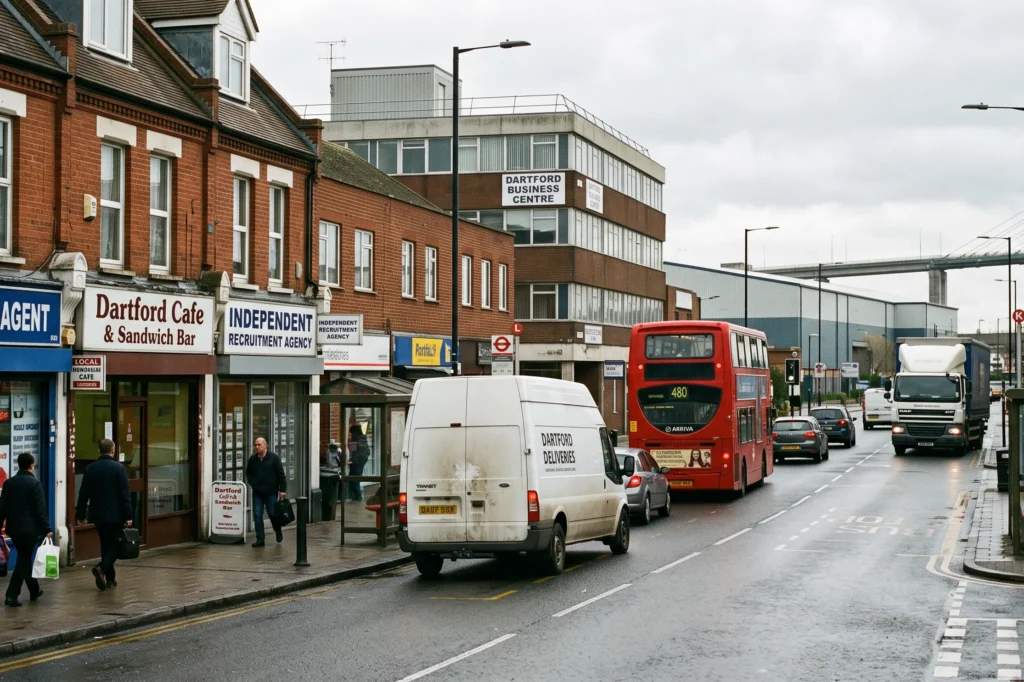
Business Insurance Dartford: A Practical Guide
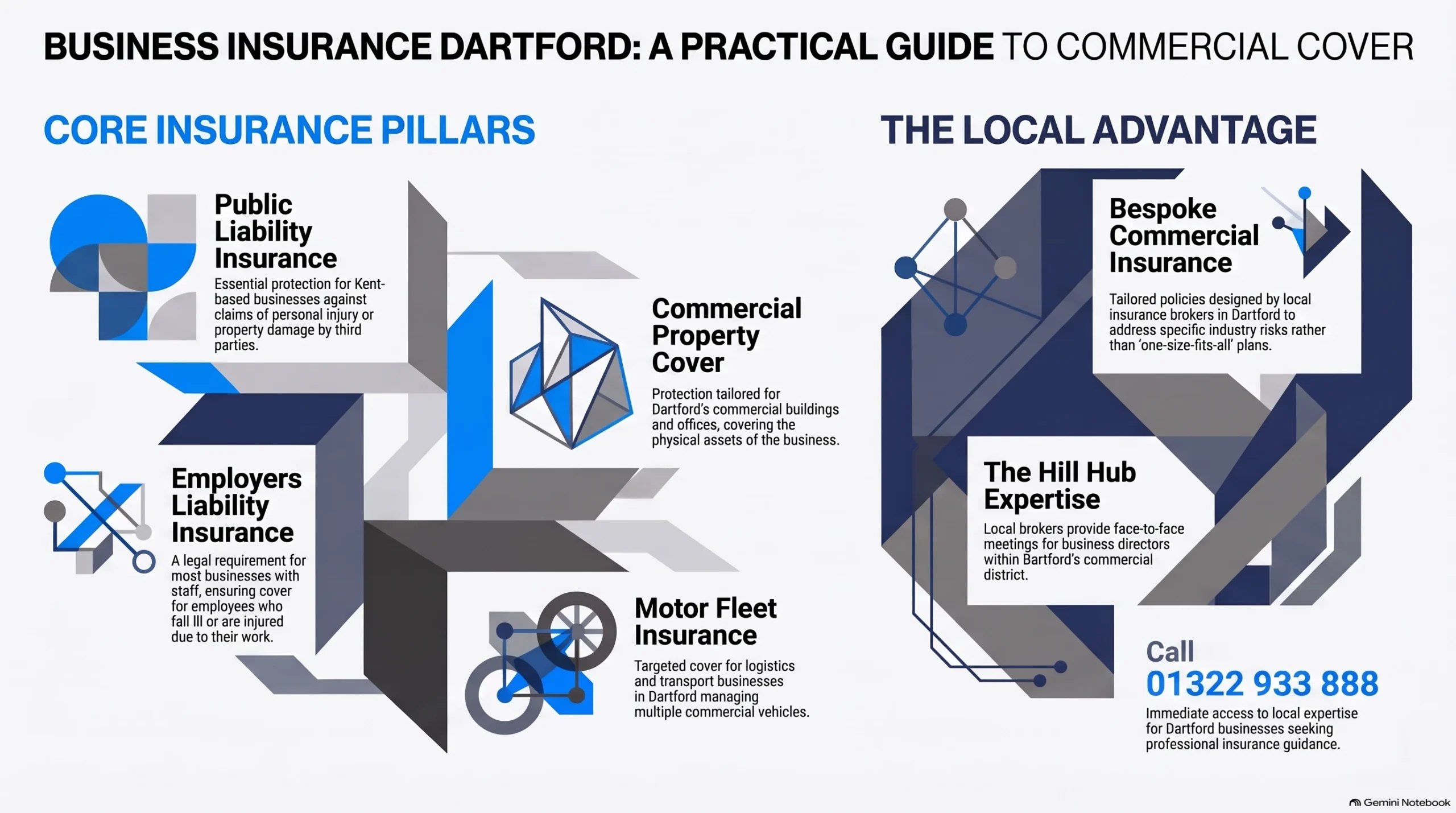
Structured business insurance Dartford cover protects operators trading across Kent and Greater London. The town sits on a dense freight and construction corridor. Logistics fleets, trade yards and industrial sites each carry distinct legal and contractual exposures. Generic cover rarely matches those exposures with any precision.
Off-the-shelf policies leave many local firms underinsured. Indemnity limits sit too low. Warranties prove unworkable once a claim is examined in detail. So how should a commercial director build cover that satisfies contract terms and still keeps premiums under control?
Key Takeaways
- Dartford businesses need tailored commercial cover because local logistics, construction and manufacturing activity carries heavier operational risk than generic policies assume.
- Employers’ liability insurance is compulsory for almost every UK employer under the Employers’ Liability (Compulsory Insurance) Act 1969.
- Meeting a local broker in central Dartford exposes hidden policy exclusions and clarifies the contractual indemnity obligations buried in contractor agreements.
- High-risk trades such as scaffolding, demolition and haulage need careful risk presentation to secure unrestricted endorsements and fair underwriting rates.
- Quarterly policy check-ins keep cover aligned with changes in plant, payroll, fleet size and turnover throughout the trading year.
Commercial Insurance Requirements at a Glance
Commercial policy structures balance compulsory statutory covers against tailored protection for trading assets. Two covers are required by law. The rest are driven by contract terms, lender conditions or plain commercial sense. Directors who let a statutory cover lapse face regulatory penalties and, in some cases, personal exposure.
The table below sets out the covers most Dartford operators carry. Market norms shift by trade and claims record, so treat the limits as a starting point. In practice, we find contractor requirements push limits well above the statutory floor, particularly on public sector and infrastructure work.
| Insurance Cover | Statutory Status | Standard Market Norms | Key Risk Drivers |
|---|---|---|---|
| Employers’ Liability | Compulsory (EL Act 1969) | £10,000,000 limit | Workplace injury, manual handling, work at height |
| Public Liability | Contractual | £5,000,000 to £10,000,000 | Third-party injury, site damage, visitor safety |
| Contractors All Risks | Contractual | Contract value limit | Works in progress, site materials, hired-in plant |
| Motor Fleet | Compulsory (RTA 1988) | Comprehensive terms | Driver profile, annual mileage, vehicle values |
| Goods in Transit | Contractual | Per-load values (RHA/CMR) | Cargo theft, transit damage, temperature failure |
Commercial Risk Landscape Across Dartford and North Kent
M25, the Crossing and Freight Movement Risk
Dartford sits at the meeting point of the M25, the A2 and the Dartford Crossing. That geography drives constant heavy goods traffic through the town. Fleet operators face raised collision frequency, transit loss and third-party damage claims. Underwriters price local postcodes accordingly, so accurate mileage and route data matters.
Warehousing density adds a second layer. Stock values concentrate in a small number of units. A single fire or escape of water can remove a year of margin. Sums insured need reviewing against current replacement cost, not the figure entered when the policy was first written.
Redevelopment at Ebbsfleet and Crossways Business Park
Commercial redevelopment across Ebbsfleet, Crossways Business Park and central Dartford has expanded the local contracting market. Groundworks, civil engineering, scaffolding and roofing firms all compete for that work. Each trade attracts its own warranties. Contractors then impose flow-down indemnity terms that many standard policies cannot satisfy.
Environmental and statutory safety duties apply alongside those contract terms. Site waste, dust suppression and noise controls sit within the regulatory frame. From experience across the sector, the firms that lose money are those that sign a contract first and check their policy wording afterwards.
Employers’ Liability and Public Liability Duties
Employers’ Liability Cover Levels and Legal Duties
Employers’ liability insurance is compulsory for almost every business with staff. The statutory minimum is five million pounds for any one occurrence. Most UK insurers issue ten million as standard. The duty extends to labour-only subcontractors, apprentices and temporary workers, which many smaller firms overlook entirely.
Certificates must be made available to staff, and copies retained. Enforcement sits with the Health and Safety Executive. Inspectors can act on a single visit. The commercial risk is larger still, because an uninsured injury claim falls directly on the company and its directors.
Public Liability Limits Demanded by Main Contractors
Public liability cover is not compulsory in law, yet it functions as a trading requirement. Contractors and public bodies in Dartford commonly specify five or ten million pounds before awarding a subcontract. Two million remains the default on many small business policies, which fails those tender conditions.
Limits are only half the question. Exclusions decide whether a claim pays. Work at height, hot works, asbestos disturbance and work near live services all carry conditions. When operating in this area, check the endorsement schedule against the actual scope of work before signing.
Did You Know?
The Employers’ Liability (Compulsory Insurance) Act 1969 allows the Health and Safety Executive to fine a business up to £2,500 for each day it trades without valid employers’ liability cover.
Construction and High-Risk Trade Cover
Scaffolding, Roofing and Work at Height
Scaffolders, roofers and demolition contractors sit in the hardest part of the liability market. Insurers apply height restrictions, hot work permit conditions and subcontractor warranties. Breach any one of them and cover can fall away at the point of claim. Wording review is not optional here.
Operative qualifications carry weight with underwriters. CISRS cards for scaffolders and CCDO cards for demolition operatives evidence competence. Presenting training records alongside method statements and risk assessments regularly secures better terms. It also removes the restrictive endorsements insurers apply when information is thin.
Civil Engineering and Underground Service Strikes
Groundworkers and civil engineering contractors face a specific exposure in service strikes. Cutting a live cable, gas main or water main creates third-party damage and potential injury claims. HSG47 sets out the expected control measures. Insurers increasingly ask to see those procedures before quoting on excavation work.
Plant exposure runs alongside it. Hired-in plant must be insured to the hire company’s terms, including continuing hire charges after a loss. Owned plant needs separate scheduling. Contractors all risks cover then protects works in progress, site materials and temporary works up to the contract value.
Cover Built for Demanding Businesses
Across high risk industries, the cover we arrange most often includes:
Public liability
Employers' liability
Motor fleet
Contractors' all risks
Freight liability
Professional indemnity
Environmental liability
Business interruption
Most businesses need a combination, rather than a single focus policy, and we build cover around your contracts, your workforce and your operational activities.
Haulage, Fleet and Goods in Transit Cover
Motor Fleet Rating for Dartford Operators
Motor insurance is compulsory under the Road Traffic Act 1988. For fleets, the rating turns on driver profile, annual mileage, vehicle values and claims record. Operators running through the Crossing accumulate mileage quickly. Telematics data and a documented driver vetting policy both help hold premiums down.
Fleet policies also need the right ancillary sections. Trailer cover, uninsured loss recovery and terms for young or agency drivers all matter. In practice, we find that fleets declaring an accurate vehicle schedule at inception avoid the mid-term adjustments that trigger the sharpest premium increases.
Goods in Transit Under RHA and CMR Terms
Carriers’ liability follows contractual trading conditions. Road Haulage Association terms cap liability by consignment weight, which rarely reflects the value of the load. All-risks goods in transit cover works on the value of the goods instead. International movements fall under CMR, with its own limits.
Operators carrying machinery, electronics or temperature-controlled loads usually need the all-risks route. Theft conditions deserve close attention. Overnight parking warranties, immobiliser requirements and unattended vehicle clauses are the terms that most often defeat a transit claim after the event.
Waste, Recycling and Environmental Exposures
Fire Prevention Plans and Permitted Sites
Waste transfer stations and materials recovery facilities carry a fire risk few insurers accept lightly. Environment Agency permits require a fire prevention plan covering pile sizes, separation distances and quarantine areas. Insurers ask for the same document. Compliance evidence directly shapes both the availability and the price of property cover.
Capacity in this sector is limited and often placed at Lloyd’s. Deductibles run high. Thermal imaging, hot work controls and documented housekeeping regimes all improve the presentation. Sites that cannot evidence permit compliance frequently struggle to secure meaningful property or business interruption cover.
Environmental Impairment Liability
Standard public liability policies exclude gradual pollution. That gap matters for waste operators, fuel storage sites and industrial premises across North Kent. Environmental impairment liability responds to clean-up costs, statutory remediation notices and third-party claims. It also covers historic contamination discovered during a site sale or lease negotiation.
Regulators can serve remediation notices under the contaminated land regime. Costs escalate quickly once groundwater is involved. Lenders and landlords increasingly require this cover as a condition of finance or a lease. Buying it late, after a problem emerges, is rarely possible on sensible terms.
Local Broking at The Hill Hub
Face-to-Face Consultations in Central Dartford
Meeting a broker in person changes the quality of the advice. An adviser can review asset registers, walk a yard and read the actual contract documents. Capital Corporate Risks Ltd works from The Hill Hub, 1A Highfield Rd, Dartford, Monday to Friday, whilst most enquiries begin with a policy review.
Local insurance brokers Dartford operators can visit tend to catch what a web form misses. Underinsured plant. A limit that fails a tender. A warranty nobody read. These details decide whether a claim pays, and they surface in conversation rather than on a proposal form.
Claims Support from Named Contacts
Claims handling decides the real value of a policy. The firm provides named contact claims advocacy, led by Dan Coleman, Operations Director. Clients deal with a person rather than a call centre queue. The broker coordinates loss adjusters, manages insurer correspondence and assembles the evidence an insurer will require.
Quarterly claims reviews run on operational accounts, alongside handling of legacy claims. The purpose is practical. Open reserves that sit too high inflate the next renewal. Challenging them early protects premiums on liability and fleet accounts, where claims experience drives rating more than anything else.
Bespoke Commercial Insurance Programmes in Practice
Risk Presentation to Specialist Underwriters
Underwriters price what they can see. A thorough presentation sets out risk management procedures, health and safety protocols, training records and a three-year claims history. Thin information produces restrictive warranties and loaded rates. Detailed information produces the opposite. The quality of the submission is a commercial decision.
Membership of BIBA and a place within the Aviva 110 broker network allow risk dossiers to reach senior underwriters directly, including Lloyd’s syndicates for harder trades. Bespoke commercial insurance terms follow from that conversation. They do not come from a comparison engine.
Ongoing Policy Reviews and Adjustment Cycles
Cover drifts out of date faster than most directors expect. New plant arrives, payroll grows and a larger JCT design-and-build contract gets signed. A ten-stage client journey with quarterly check-ins captures those shifts. Adjusting mid-term prevents underinsurance and avoids arguments about material change after a loss.
The review cycle has a fixed shape. Assess current policies, contracts and asset registers. Prepare the market presentation. Place the risk with commercial insurers and syndicates. Examine schedules, limits and excesses together. Then set the next round of check-ins. Each stage removes a gap before it becomes a claim.
Final Thoughts
Choosing the right business insurance Dartford structure protects trading assets, workforce stability and commercial reputation. A coherent programme aligns statutory liabilities, fleet exposure and property risk. It also matches the indemnity limits your contracts actually demand.
Review trading contracts before signing them, not at renewal. Operational change is constant across North Kent, and cover should track it. A programme reviewed quarterly stays fit for purpose as the business grows.
Speak to an Insurance Specialist
Whether you need a new quote, want to discuss your renewal or have a question about an existing policy, our team is here to help.
Frequently Asked Questions
Q: What is the statutory minimum limit for employers’ liability insurance?
A: The Employers’ Liability (Compulsory Insurance) Act 1969 sets a statutory minimum of five million pounds for any one occurrence. In practice most UK insurers issue ten million as standard, and many contracts specify that higher figure. The cover must extend to employees, apprentices and labour-only subcontractors. Trading without it exposes the company to enforcement action. Any injury claim then falls directly on the business and its directors.
Q: Why do Dartford construction firms need higher public liability limits?
A: Contractors and public sector bodies in Dartford routinely require five or ten million pounds of public liability indemnity before awarding a subcontract. Work near major transport links, dense residential development or live utility networks raises third-party damage risk sharply. A single incident can exceed a standard two million limit. Carrying the limit your contracts specify keeps you compliant and protects cash flow when a large claim lands.
Q: What is the difference between carriers’ liability and all-risks goods in transit cover?
A: Carriers’ liability responds according to your trading conditions. Road Haulage Association terms, for example, cap liability by the weight of the consignment rather than its value. All-risks goods in transit cover responds to the value of the goods themselves. Operators moving machinery, electronics or hazardous loads usually need the all-risks route. Theft warranties, overnight parking conditions and immobiliser requirements should be checked before relying on either.
Q: How does meeting a broker at The Hill Hub help my business?
A: A face-to-face meeting in central Dartford gives a broker access to information a web form never captures. Asset registers, site procedures, contract documents and actual working practice can all be reviewed together. That detail produces a stronger presentation to underwriters and better policy terms. It also establishes a named relationship, which matters most at the point a claim is reported and needs pushing forward.
Q: Why are quarterly policy check-ins important?
A: Commercial risk changes throughout the year. Businesses buy plant, take on larger subcontracts, grow payroll and add vehicles. Reporting all of that only at renewal creates underinsurance. It can also give an insurer grounds to reduce a claim for unnotified material change. Quarterly contact keeps schedules, vehicle registers and sums insured current. It gives early warning when a new contract imposes limits your policy cannot meet.
About The Author
Darren Judd
Director, Co-Founder and Co-Owner of Capital Corporate Risks Ltd

Experienced Account Executive with a demonstrated history of working in the insurance industry. Skilled in Account Management, Risk Management, Business Development across all classes of insurance within the Construction Industry,