
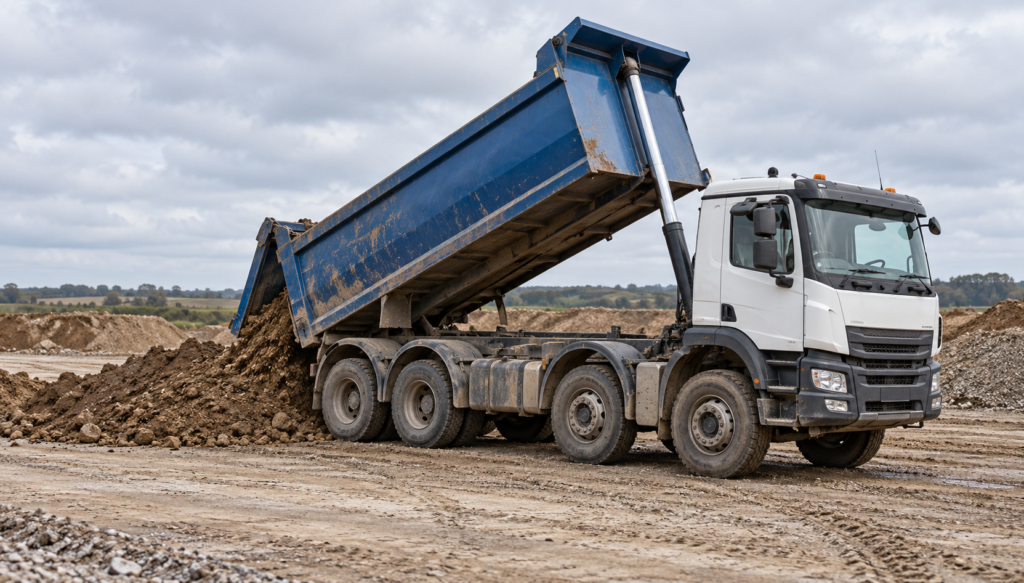
Muckaway Insurance: Cover for Tipper Operators
Tipper and grab hire operators face distinct exposures when moving inert spoil, contaminated soil, and demolition debris from construction sites. Securing adequate muckaway insurance demands a thorough understanding of heavy haulage operations, site loading hazards, and environmental enforcement. From road collisions to off-road tipping accidents, commercial tipper operators carry substantial legal and financial responsibilities every working day. Selecting the appropriate cover protects vehicle capital, business reputation, and commercial cash flow against unforeseen losses on civil engineering projects.
Operating eight-wheel tippers involves unique mechanical stresses, fluctuating ground conditions, and strict environmental compliance protocols. Standard commercial vehicle policies frequently leave critical gaps regarding tipping stability, waste carrier liabilities, and underground utility strikes. Does your current insurance arrangement protect your business when contaminated excavation materials cause unexpected environmental damage or site disruption?
Key Takeaways
- Commercial tippers require bespoke motor fleet protection that accommodates harsh quarry terrain. This cover protects operators without invoking restrictive off-road exclusions or unmanageable excess payments.
- Carrying inert spoil or hazardous excavation waste requires valid Environment Agency Upper Tier registration. Without it, liability protection can fail during enforcement.
- Specialist tipper policies must name hydraulic failure, lateral body rollover and overhead cable strikes as insured events, not grey areas.
- Combining aggregate haulage insurance with firm goods in transit terms covers load loss, site damage liabilities and emergency highway clean-up costs.
- Maintaining rigorous digital maintenance records and driver safety protocols reduces commercial expenditure. These proactive measures directly lower insurance premiums across multi-vehicle tipper and grab fleets.
Essential Cover Stack for Muckaway Fleets
A balanced insurance stack for tipper operators combines statutory road risk provisions with commercial liability. Excavation haulage exposes heavy commercial vehicles to severe structural stress and unstable unloading surfaces. Furthermore, statutory environmental bodies enforce strict regulatory standards across the United Kingdom to prevent the unlawful disposal of construction waste.
Standard haulage policies rarely accommodate the severe hazards associated with site tipping, ground contamination, and aggregate transit. Tipper operators must align their insurance schedules with customer contractual requirements and waste disposal regulations. Securing proper endorsements prevents costly disputes when handling complex materials on active development schemes.
| Policy Class | Primary Operational Function | Statutory Basis |
|---|---|---|
| Motor Fleet | Protects tippers on highways and private construction sites | Road Traffic Act 1988 |
| Public Liability | Covers third-party injury and property damage during haulage | Common Law Duty of Care |
| Employers’ Liability | Safeguards drivers, plant operators, and yard maintenance personnel | Employers’ Liability (Compulsory Insurance) Act 1969 |
| Goods in Transit | Insures aggregates, spoil, and secondary materials during transport | Contractual Carriage Terms |
| Environmental Liability | Manages remediation costs from accidental chemical or fuel spills | Environmental Protection Act 1990 |
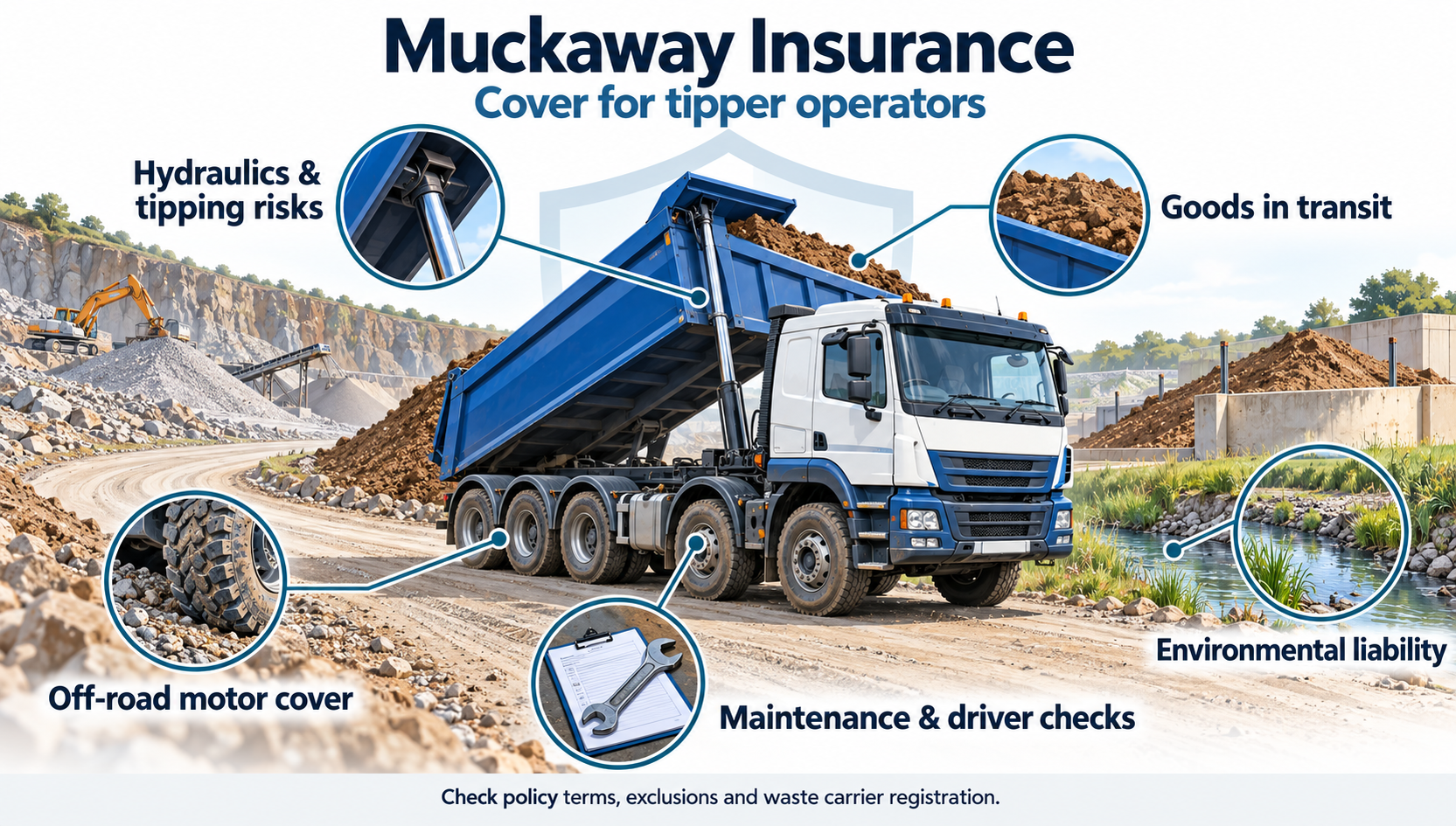
Motor Fleet Protection for Rigid and Articulated Tippers
Harsh Terrain and Off-Road Driving Risks
Commercial tippers routinely operate on uneven ground and unmade haul roads. Building sites present soft ground where suspension and tyre damage occur frequently. Insurers scrutinise these operating environments closely. Soft ground creates severe claims exposures for axle breakage and chassis twist during collection cycles.
Many general haulage policies restrict accidental damage occurring off the public highway. Operators must ensure their motor fleet schedule explicitly permits off-road operation. Tipping at quarries, landfills, and infrastructure projects requires unrestricted site cover without imposing prohibitive deductibles.
Any-Driver Policies and Fleet Driver Vetting
Flexible any-driver policies allow muckaway businesses to deploy agency drivers quickly. This flexibility covers unexpected staff absences without administrative delays. However, underwriters require robust driver vetting frameworks. Clear licence endorsement thresholds and minimum experience rules prevent severe premium increases or sudden coverage cancellations during policy renewals.
Checking electronic licences via the Driver and Vehicle Licensing Agency ensures strict compliance. In practice, we find that operators running structured driver inductions and ongoing tachograph audits present a cleaner risk profile to fleet underwriters. These disciplined procedures protect the firm from uninsured driver risks.
Did You Know?
Transporting controlled waste without registering as a carrier is an offence under section 1 of the Control of Pollution (Amendment) Act 1989. The offence is triable summarily only. Sentencing guidance confirms that the court may impose an unlimited fine on conviction.
Waste Carrier Licensing and Environmental Regulations
Environment Agency Upper Tier Registration
Transporting controlled excavation waste requires muckaway hauliers to hold valid registration. Operators must maintain Upper Tier waste carrier status with the Environment Agency in England. Carrying commercial spoil without this statutory registration breaches section 34 of the Environmental Protection Act 1990. Such offences expose businesses to criminal prosecution.
Operating across devolved borders demands reciprocal registration with Natural Resources Wales, SEPA, or DAERA. Insurers view regulatory compliance as a fundamental condition. An unlicensed waste transport operation can void liability protections during an enforcement audit or serious incident investigation.
Duty of Care and Contaminated Soil Documentation
Hauliers must verify that waste transfer notes accurately detail spoil composition before leaving site. Moving contaminated ground containing hydrocarbons, heavy metals, or asbestos requires correct hazardous waste paperwork. Inadequate documentation breaches environmental mandates. Furthermore, compliance failures compromise the carrier’s commercial waste management insurance protection during a regulatory inquiry.
When tippers carry non-inert loads mislabelled as clean fill, liability flows down to the transport operator. Rigorous visual inspection and testing verification shield hauliers from severe clean-up penalties. Documented audit trails demonstrate that the business adhered fully to statutory duty of care standards.
Cover Built for Demanding Businesses
Across high risk industries, the cover we arrange most often includes:
Public liability
Employers' liability
Motor fleet
Contractors' all risks
Freight liability
Professional indemnity
Environmental liability
Business interruption
Most businesses need a combination, rather than a single focus policy, and we build cover around your contracts, your workforce and your operational activities.
Mechanical Operations and Hydraulic Tipping Exposures
Lateral Stability and Rollover Hazards
Lateral rollovers represent catastrophic property and vehicle damage scenarios for muckaway and aggregate haulage operators. Raising a loaded tipper body shifts the centre of gravity upward significantly. Minor ground subsidence, wind gusts, or sticking wet spoil cause sudden tipping incidents. These rollovers crush adjacent property and endanger lives on active sites.
Insurers investigate rollover claims meticulously to ascertain if drivers conducted ground stability checks. Tipping on uncompacted backfill or across cross-slopes breaches operational standards. Documented driver training on level ground discharge directly mitigates liability disputes following an overturn incident.
Overhead Utility Strikes and Crane Arm Extensions
Overhead power lines and telecommunications cables present severe collision hazards during tipping and grab lorry loading operations. Striking high-voltage infrastructure triggers substantial third-party compensation claims and widespread site shutdowns. These dangerous accidents cause life-threatening injuries on site. Contractors demand comprehensive public liability limits that satisfy major tier-one developers.
Equipping vehicles with height limiters, overhead proximity sensors, and body-raised warning beacons protects operatives. Mechanical aids actively prevent contact with live overhead lines. Integrating these safety features into standard operational risk assessments demonstrates proactive risk control to underwriters.
Goods in Transit and Cargo Liabilities
Carriers’ Liability under Standard Haulage Terms
Operating under Road Haulage Association conditions of carriage establishes a recognised trading framework. This contract restricts a haulier’s financial exposure per tonne of cargo. Without explicit contractual incorporation, muckaway operators risk facing full common law liability. Uncapped liability applies to damaged materials or severe project delays caused by transit disruption.
Incorporating aggregate haulage insurance alongside established carriage contracts clarifies financial recovery expectations. Defined conditions apply to quarried stone, topsoil, and recycled materials. Clear terms avoid complex commercial litigation when loads suffer contamination or accidental loss.
Spillages, Sheeting Failures, and Highway Clearances
Highway debris shed from unsheeted or poorly secured tipper bodies creates immediate dangers for trailing motorists. Loose aggregate stones can strike third-party windscreens and trigger serious collisions. Inadequate sheeting violates road traffic legislation. Furthermore, bulk spillages across carriageways generate immense emergency road closure and cleansing recovery costs.
Goods in transit schedules should include specific extensions for debris removal and highway clean-up expenses. Automated sheeting systems reduce driver operational errors significantly. Modern sheeting equipment lowers the frequency of costly road clearance claims on major transport routes.
Public and Employers’ Liability in Excavation Haulage
Site Access and Pedestrian Interface Protocols
Construction sites feature dense interactions between commercial tippers, groundworkers, plant equipment, and logistics vehicles. Reversing manoeuvres and blind spots generate severe pedestrian injury claims. Consequently, tipper hauliers must hold robust public liability indemnity limits. Cover typically starts at five million pounds to satisfy major civil engineering contracts.
Compliance with the Construction (Design and Management) Regulations 2015 requires hauliers to follow site traffic management plans. Installing multi-camera systems, audible reversing alarms, and blind-spot mirrors significantly reduces incident probability. These safety measures protect vulnerable groundworkers in congested offloading bays.
Driver Welfare and Workplace Safety Protections
Under the Employers’ Liability (Compulsory Insurance) Act 1969, operators must protect drivers and yard staff from injury. Tipper drivers encounter severe risks from falls from catwalks and manual sheeting operations. Repetitive vibrations from driving over unpaved access tracks also cause occupational illnesses across transport teams.
The standard market placement for employers’ liability provides ten million pounds of indemnity. Routine health surveillance, slip-resistant steps, and automated equipment assist operators in fulfilling safety duties. These protocols support compliance under the Health and Safety at Work etc. Act 1974.
Environmental Liabilities and Hazardous Contamination
Gradual Versus Sudden and Accidental Pollution
Standard public liability policies generally restrict pollution coverage to sudden, identifiable, and accidental events. A ruptured fuel tank following an impact represents a typical covered scenario. In contrast, gradual contamination from slow hydraulic leaks remains excluded without dedicated cover. Leaching through stockpiled spoil also requires specialist environmental impairment liability protection.
Regulators enforce strict remediation standards under the Environmental Damage (Prevention and Remediation) (England) Regulations 2015. Remedying diesel spills that reach watercourses or protected habitats can generate clean-up costs far exceeding standard vehicle policy sub-limits. Dedicated environmental extensions prevent catastrophic out-of-pocket liabilities.
Inadvertent Transport of Asbestos and Invasive Species
Excavation sites frequently conceal undetected asbestos fragments or Japanese knotweed rhizomes within soil intended for inert disposal. Transporting these invasive substances without specialised handling protocols spreads contamination to recycling facilities. Such incidents prompt statutory enforcement actions and third-party decontamination claims. Site remediation expenses can escalate rapidly without adequate insurance protections.
Specialist waste management insurance bridges the coverage void when hauliers inadvertently move controlled biological or chemical contaminants. Clear waste classification protocols and contractor declarations protect transport businesses. These rigorous controls prevent hauliers from assuming liability for unrecorded site contaminants.
Risk Management and Fleet Telematics Integration
Telematics Data and Driver Behaviour Tracking
Integrated telematics systems allow transport managers to track speeding, harsh braking, and cornering forces across their fleet. Underwriters favour operators who use real-time vehicle tracking. Transparent performance monitoring actively discourages aggressive driving habits. These habits often lead to costly commercial road traffic collisions on public highways.
Combining telematics reporting with targeted driver coaching substantially reduces claims frequency over successive policy years. Proactive monitoring provides telemetry data that assists claims handlers in resolving disputed liability incidents rapidly. Objective data refutes fraudulent third-party allegations effectively.
Fleet Operator Recognition Scheme Accreditation
Accreditation through the Fleet Operator Recognition Scheme demonstrates an operator’s commitment to safety and environmental compliance. Fleet insurers frequently provide preferential terms and deductible reductions to tipper companies holding Silver or Gold status. Verified operational standards and rigorous maintenance schedules reassure underwriters during annual negotiations.
FORS accreditation also unlocks commercial opportunities by satisfying contractual supply chain requirements on major public sector infrastructure projects. From experience across the sector, these documented standards drive consistent vehicle roadworthiness and disciplined tachograph management. Strong compliance credentials enhance fleet reputation.
Final Thoughts
Operating tippers and grab lorries within modern construction logistics requires a tailored insurance programme. Hauliers must accommodate both highway transit and complex site risks. A comprehensive muckaway insurance structure provides financial resilience against hydraulic plant failure, environmental remediation orders, and third-party injury claims.
Commercial construction practices enforce strict environmental reporting standards and traffic compliance schemes. Consequently, hauliers must continuously review their risk controls. Aligning vehicle maintenance, driver education, and regulatory documentation ensures long-term operational viability across an increasingly scrutinised transport sector.
Speak to an Insurance Specialist
Whether you need a new quote, want to discuss your renewal or have a question about an existing policy, our team is here to help.
Frequently Asked Questions
Q: What is the difference between standard haulage cover and muckaway insurance?
A: Standard haulage insurance focuses primarily on goods transported on public highways under conventional carriage contracts. In contrast, muckaway insurance accounts for the severe hazards of construction sites. These risks include off-road terrain, soft ground subsidence, hydraulic body tipping, and grab crane operations. Furthermore, muckaway policies address waste regulatory obligations. They cover inert spoil, excavation rubble, and contamination risks that standard commercial vehicle policies exclude from their basic terms.
Q: Why is an Upper Tier waste carrier licence mandatory for tipper operators?
A: The Environment Agency requires businesses that transport or dispose of controlled waste to hold an Upper Tier licence. Excavation soil, demolition rubble, and construction site spoil qualify as controlled waste under the Environmental Protection Act 1990. Operating without this statutory registration exposes hauliers to criminal prosecution, heavy financial penalties, and vehicle impoundment. Crucially, unlicensed operations invalidate third-party public liability and commercial motor insurance policies during waste transport activities.
Q: Does standard tipper fleet insurance cover tipping rollovers on site?
A: Comprehensive tipper fleet insurance generally covers vehicle damage resulting from an accidental rollover. However, policies often feature strict conditions regarding off-road use and mechanical maintenance. Insurers may reject claims if an investigation proves the driver ignored basic safety protocols. Common issues include tipping on excessive slopes or failing to distribute wet spoil evenly. Operators should confirm that their policy includes unmade ground cover and manageable excess levels for tipping incidents.
Q: How does aggregate haulage insurance differ when carrying recycled materials?
A: Aggregate haulage insurance protects bulk quarried stone, sand, gravel, and recycled secondary aggregates from transit loss or contamination. When transporting recycled materials, operators face heightened risks of foreign debris contamination. Typical contaminants include scrap metals, glass, or chemical residues. Insurers require clear contracts defining cargo value and carriage conditions. This documentation ensures goods in transit limits adequately cover rejection costs or third-party damage claims caused by delivered materials.
Q: What level of public liability insurance do major contractors require from muckaway hauliers?
A: Major construction contractors routinely require muckaway hauliers to carry a minimum of five million pounds in public liability insurance. Furthermore, many infrastructure projects demand ten million pounds of indemnity. This heightened limit reflects the severe risks of manoeuvring heavy multi-axle lorries in restricted site environments. Collisions with personnel, temporary works, or live utility networks can generate immense third-party compensation claims. Holding adequate indemnity ensures hauliers satisfy mandatory pre-qualification criteria on commercial developments.
About The Author
Darren Judd
Director, Co-Founder and Co-Owner of Capital Corporate Risks Ltd

Experienced Account Executive with a demonstrated history of working in the insurance industry. Skilled in Account Management, Risk Management, Business Development across all classes of insurance within the Construction Industry,