
Haulage Insurance Cover.
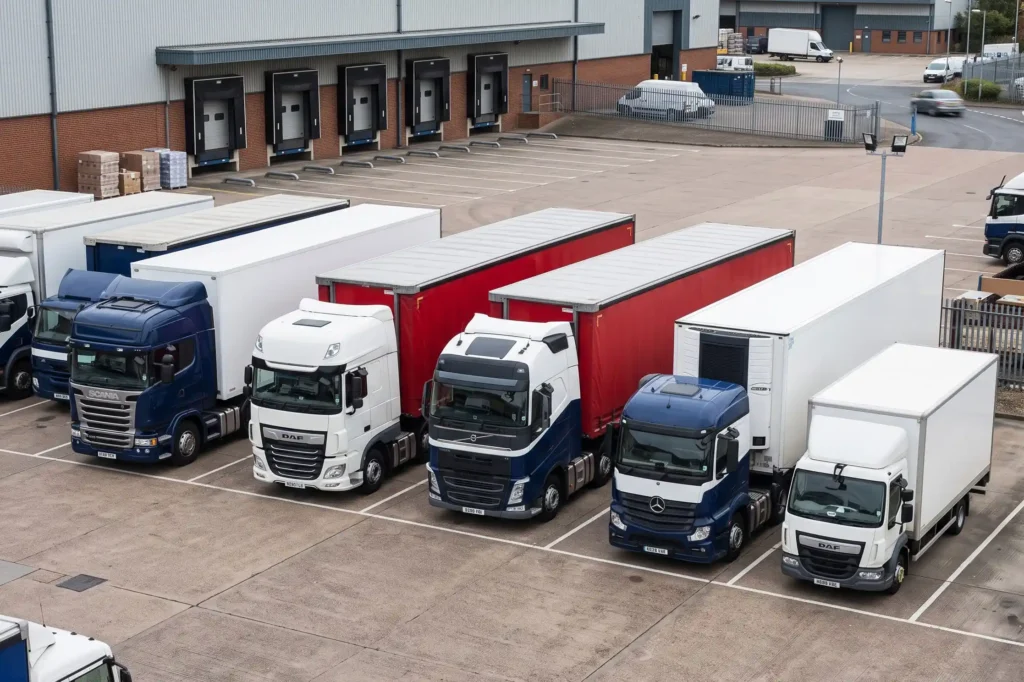
UK commercial transport operations face demanding regulatory structures and complex daily road risks. Robust haulage insurance provides financial resilience against vehicle accidents, cargo loss, and environmental spills. It also protects against third-party liabilities across domestic and international routes. Freight operators must balance mandatory statutory obligations with contractually imposed carriage terms to safeguard their commercial haulage fleets. Maintaining proper insurance coverage ensures compliance with licensing authorities. It also protects valuable physical assets and business earnings against unexpected operational disruptions.
Heavy goods vehicle fleets face escalating claims costs, strict Traffic Commissioner oversight, and rigid contractual liabilities under trade association terms. Navigating the operational differences between own-account transport and hire-and-reward haulage requires a clear understanding of indemnity structures. How can transport management construct an appropriate insurance programme that satisfies regulatory thresholds whilst mitigating exposure to catastrophic loss?
Key Takeaways
- Motor fleet insurance under the Road Traffic Act 1988 provides compulsory third-party indemnity whilst offering comprehensive options for heavy vehicle damage.
- Goods in transit insurance protects commercial hauliers carrying customer freight under standard Road Haulage Association conditions or broader all-risks policy structures.
- Hire-and-reward transport operations require specialised commercial policy terms because carrying third-party freight exposes hauliers to significantly higher operational risks than own-account transport.
- The Employers Liability Compulsory Insurance Act 1969 requires UK haulage businesses employing staff to maintain a minimum five million pounds indemnity limit.
- Traffic Commissioners mandate strict financial standing capital thresholds for Operator Licence holders to ensure haulage businesses maintain sufficient funds to support safe operations.
Essential Insurance Covers for Haulage Operations
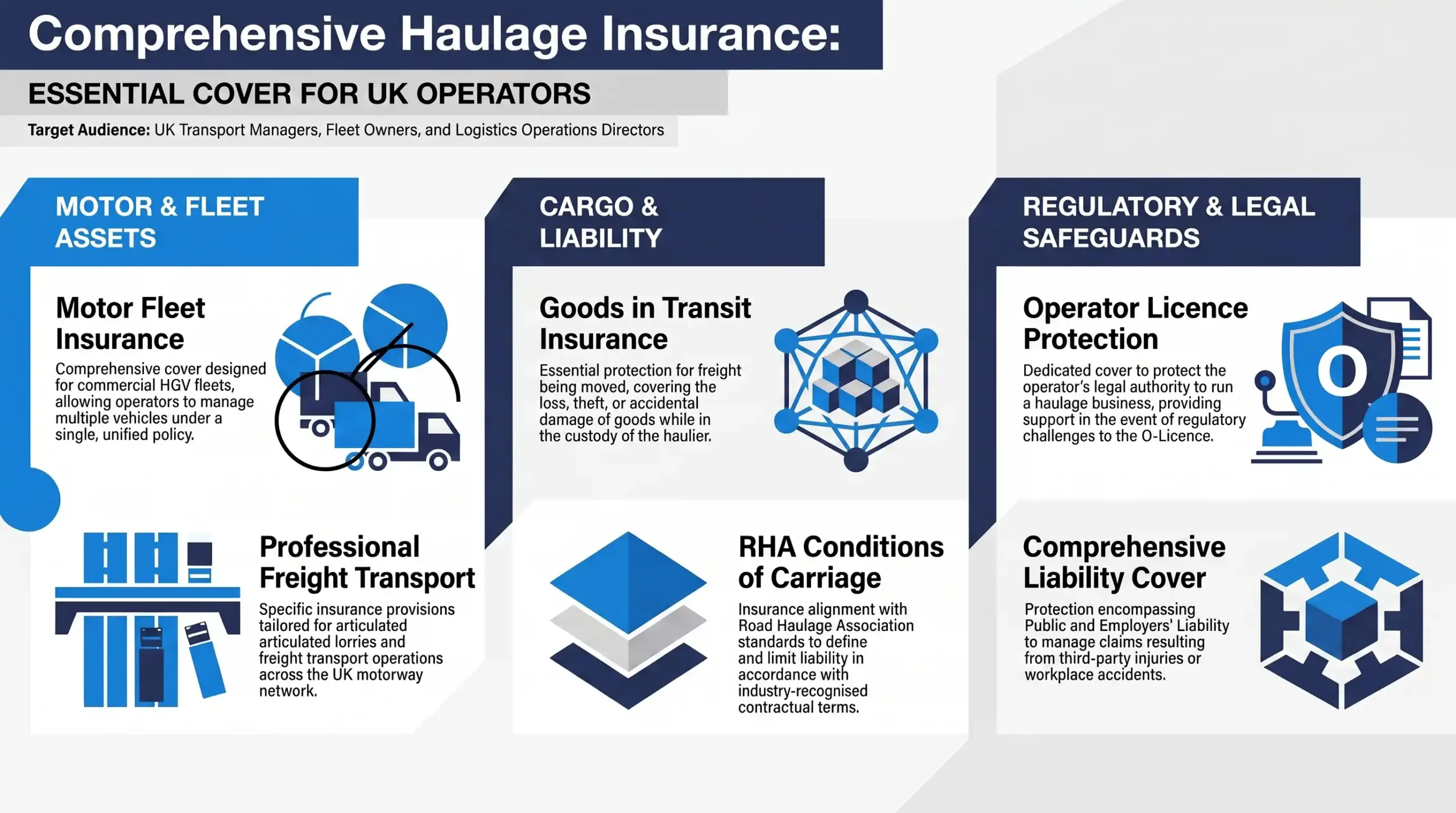
Haulage operations require a layered insurance structure to cover road risks, third-party liabilities, and customer cargo losses. Each policy component addresses specific legal requirements or commercial contracts. Understanding how these distinct covers interact allows transport managers to build a robust protection programme. This should be tailored to fleet size, consignment values, and geographical scope.
Insurers evaluate haulage risks using operational parameters including gross vehicle weight, haulage trade type, and driver management history. The table below outlines the primary insurance covers required by UK haulage operators. It details the core protection provided and the typical regulatory or contractual triggers driving placement across commercial transport fleets.
| Insurance Cover | Primary Purpose | Operational Trigger |
|---|---|---|
| Motor Fleet Insurance | Covers third-party injury, property damage, and own vehicle repair following accidents | Road Traffic Act 1988 statutory requirement for road use |
| Goods in Transit Insurance | Protects customer cargo against loss, theft, or damage during carriage | RHA Conditions, CMR Convention, or customer trading terms |
| Public Liability | Indemnifies third-party bodily injury or property damage from non-driving activities | Depot operations, loading, unloading, and site deliveries |
| Employers Liability | Covers employer legal liability for driver and staff workplace injuries | Employers Liability (Compulsory Insurance) Act 1969 |
| Environmental Liability | Protects against sudden or gradual pollution clean-up costs and fuel spills | Environmental Protection Act 1990 and permit conditions |
Core Commercial Vehicle and Fleet Protections
Comprehensive Motor Fleet Cover Structures
Motor fleet policies provide essential third-party bodily injury and property damage cover. This is required by the Road Traffic Act 1988 across all business vehicles. Comprehensive insurance extends protection to physical damage, fire, and theft. This covers owned or leased heavy goods vehicles, rigids, trailers, and light commercial haulage units.
Operators can structure motor fleet insurance on an any-driver basis or restricted named-driver schedules depending on operational flexibility needs. Fleet policies typically consolidate single-vehicle covers into a single renewal schedule. This simplifies administrative management whilst establishing consistent excess levels across articulated lorries, drawbar units, and distribution vans.
Fleet Rating and Risk Management Mechanics
Insurers establish motor fleet insurance premiums by analysing individual claims history, vehicle counts, and operational risk metrics. Incorporating telematics data, driver camera systems, and proactive claims management strategies enables hauliers to demonstrate superior risk profiles. This directly reduces annual underwriting costs and mitigates loss frequency across active transport routes.
Fleet rating mechanisms apply once operators expand beyond minimum vehicle thresholds. Pricing then shifts from fixed vehicle tables to experience-based burning cost calculations. Regular DVLA licence checks, strict driver induction standards, and rapid incident notification routines all safeguard the fleet loss ratio.
Cargo Protection and Goods in Transit Options
Standard Carriage Conditions and Carrier Liability
Carriers liability goods in transit insurance indemnifies hauliers for loss or damage to customer cargo. This applies where legal liability arises under contract terms. Domestic haulage in the UK usually operates under Road Haulage Association conditions of carriage. These conditions restrict carrier financial liability to a defined limit per tonne.
RHA conditions cap carrier liability at £1,300 per tonne of gross weight lost or damaged. This applies unless custom terms are negotiated before transport commences. Hauliers relying on standard carriage terms must ensure their goods in transit policy aligns with these contractual limits. This ensures full recovery during claims without exposing the business to unhedged balance sheet losses.
All-Risks Goods in Transit Coverage Options
All-risks goods in transit insurance provides broader cargo cover. It insures consignments for full actual value regardless of contractual liability limits. This policy structure suits operators moving high-value freight, electronics, pharmaceuticals, or specialised equipment. These cargo owners require complete material damage protection throughout the transit process.
All-risks policies frequently incorporate inner sub-limits and strict warranties. These cover target goods, overnight unattended parking, vehicle security alarms, and prompt loss notifications. Transport businesses handling temperature-controlled food or hazardous materials must verify their policy endorsements. These should extend to refrigeration unit breakdown, demurrage costs, and cleanup liabilities.
Did You Know?
Under the Road Haulage Association (RHA) Conditions of Carriage, a haulier’s standard liability for lost or damaged goods is capped. The limit is £1,300 per tonne, or £1.30 per kilogram, of gross weight. High-value lightweight freight therefore requires explicit contractual extensions or full all-risks goods in transit cover.
Operational Differences Between Own-Account and Hire-and-Reward
Own-Account Transport Underwriting Expectations
Own-account transport operations carry goods owned directly by the business. This supports internal commercial activities, such as manufacturers delivering finished goods or builders carrying materials. Underwriters classify own-account risks differently from professional hauliers. The vehicles operate secondary to primary business operations, resulting in lower overall exposure profiles.
Own-account operators require standard motor fleet policies paired with transit cover for internal stock and tools. However, using own-account policy structures to carry third-party freight for financial remuneration voids cover under standard policy exclusions. This leaves the business uninsured against road accidents and cargo losses.
Hire-and-Reward Commercial Risk Profiles
Hire-and-reward haulage involves transporting third-party goods for payment. This significantly increases underwriting risk due to higher annual mileages, varied cargo profiles, and strict delivery schedules. Insurance policies for hire-and-reward operators reflect these intense operational demands through comprehensive motor fleet, goods in transit, and liability protection.
Hire-and-reward hauliers must ensure that their motor fleet insurance explicitly permits haulage use rather than standard business travel. Carrying customer freight under incorrect usage classifications invalidates motor insurance under the Road Traffic Act 1988. This exposes directors to personal liability and vehicle impoundment by enforcement agencies.
Cover Built for Demanding Businesses
Across high risk industries, the cover we arrange most often includes:
Public liability
Employers' liability
Motor fleet
Contractors' all risks
Freight liability
Professional indemnity
Environmental liability
Business interruption
Most businesses need a combination, rather than a single focus policy, and we build cover around your contracts, your workforce and your operational activities.
Statutory Liabilities and Operational Employer Duties
Mandatory Employers Liability Requirements
The Employers’ Liability (Compulsory Insurance) Act 1969 mandates minimum insurance protection for UK haulage operators employing staff. This covers employee injury or illness. Standard market practice provides ten million pounds in indemnity. This safeguards businesses against claims arising from driving accidents, manual handling injuries, and depot incidents.
Employers’ liability policies cover full-time drivers, part-time warehouse operatives, agency staff, and sub-contracted personnel working under direct operational control. Failure to display statutory certificates or maintain adequate compulsory insurance triggers severe daily penalties from the Health and Safety Executive. These penalties apply during routine transport audits.
Public Liability and Third-Party Property Damage
Public liability insurance covers legal liabilities for third-party personal injury or property damage. This applies during non-driving haulage activities, such as loading goods, depot operations, or site deliveries. Commercial contracts frequently mandate indemnity limits of five million or ten million pounds to meet site access safety requirements.
Motor policies cover vehicular collision damage on public roads. Public liability instead responds to incidents occurring off-road within customer premises or logistics hubs. Combining public and employers liability within a single commercial schedule prevents indemnity disputes between competing insurers. This matters most following complicated warehouse or delivery accidents.
Regulatory Compliance and Operator Licensing Standards
Financial Standing Requirements for Traffic Commissioners
The Goods Vehicles (Licensing of Operators) Act 1995 requires commercial haulage firms to hold a valid Operator Licence. This is administered by the Office of the Traffic Commissioner. Applicants and licence holders must demonstrate required statutory financial standing. This proves they hold sufficient reserve capital to maintain fleet vehicles correctly.
Financial standing levels update annually based on European monetary thresholds. These require a specified capital figure for the first heavy vehicle and reduced additional capital for subsequent vehicles. Maintaining appropriate haulage insurance and clean vehicle inspection records directly protects the Operator Licence. This matters most during regulatory audits and Traffic Commissioner public inquiries.
Drivers Hours Legislation and Tachograph Monitoring
Haulage operators must strictly enforce retained EU Regulation 561/2006 governing driver working time, mandatory rest breaks, and continuous driving limits. Digital tachograph monitoring system oversight ensures fleet drivers comply with legal rest protocols. This directly reduces fatigue-related motorway accidents and supports positive underwriting evaluations.
DVSA enforcement officers actively inspect vehicle tachograph records during roadside checks and depot audits. Persistent working time breaches, poor maintenance logs, or uncorrected vehicle defects jeopardise transport manager professional competence standing. This can lead to licence curtailment, vehicle suspensions, and severe insurance premium surcharges.
Hazardous Freight and Specialised Load Protections
Carriage of Dangerous Goods and ADR Compliance
Transporting hazardous materials requires compliance with the Carriage of Dangerous Goods and Use of Transportable Pressure Equipment Regulations 2009. Hauliers moving chemicals, fuel, or compressed gases must obtain specific ADR insurance endorsements and ensure driver certification. Vehicles must also carry specialised emergency safety hardware.
Standard motor fleet and public liability policies frequently exclude pollution damage or hazardous chemical releases unless endorsed. Arranging specialised environmental impairment liability cover protects operators against extensive cleanup costs and watercourse contamination remediation. This cover also addresses statutory penalties enforced by the Environment Agency following a hazardous freight spillage.
Heavy Haulage and STGO Movement Provisions
Abnormal load and heavy haulage operations fall under the Road Vehicles (Authorisation of Special Types) General Order 2003 (STGO). These movements carry exceptional structural weights and dimensions. Insurance programmes for STGO hauliers must account for heightened third-party property damage risks, bespoke trailer values, and specialised route management.
STGO movement categories mandate formal electronic notifications to highway authorities and police forces. These are submitted via Electronic Service Delivery for Abnormal Loads (ESDAL). High-value machinery movement contracts usually demand elevated public liability limits exceeding ten million pounds. Operators also need specialist hired-in equipment and continuing hire charge protections.
International Transport and EU Operations Cover
CMR Convention Liabilities and Cross-Border Transit
International road freight transit across Europe falls under the CMR Convention. This is the Convention on the Contract for the International Carriage of Goods by Road. CMR rules impose strict liability on international hauliers for cargo loss or damage. These rules establish financial liability caps based on Special Drawing Rights per kilogram.
Hauliers operating across European routes must ensure their goods in transit policy includes explicit CMR extensions. Standard domestic RHA clauses are not sufficient. Insurers evaluate cross-border risks by examining overseas mileage ratios, ferry transit protocols, and secure parking arrangements. Driver security training also helps prevent unmanifested stowaway incidents.
Cabotage Rules and European Road Transport Extensions
UK transport firms conducting domestic operations within EU member states must follow post-Brexit cabotage regulations and bilateral road freight quotas. Insurance coverage must include territorial extensions for European vehicle operations. This ensures green card documentation, breakdown assistance, and legal defence protection remain active abroad.
Operating vehicles outside territorial policy limits without prior insurer notification invalidates commercial motor and transit cover. Haulage management must maintain clear records of international trip durations. Policy extensions should cover trailer interchange agreements, European breakdown towing expenses, and third-party motor liability minimums in destination countries.
Final Thoughts
Structuring an effective insurance programme requires aligning motor fleet, cargo, and liability covers with operational realities. Comprehensive haulage insurance protects commercial transport businesses against severe financial losses whilst ensuring strict compliance with Traffic Commissioner licensing requirements.
Proactive risk management, regular driver training, and diligent tachograph oversight strengthen policy performance over time. Maintaining robust insurance protection ensures UK haulage fleets remain financially secure, fully compliant, and commercially competitive across changing transport markets.
Speak to an Insurance Specialist
Whether you need a new quote, want to discuss your renewal or have a question about an existing policy, our team is here to help.
Frequently Asked Questions
Q: What is the difference between own-account transport and hire-and-reward haulage insurance?
A: Own-account insurance covers businesses transporting their own goods as part of primary operations, such as manufacturers or builders. Hire-and-reward haulage insurance protects commercial operators transporting freight belonging to third parties in exchange for payment. Hire-and-reward carries higher risk due to increased mileage and contractual cargo liabilities. Consequently, carrying customer goods under an own-account policy invalidates cover. Haulage operators must secure explicit hire-and-reward policy terms to ensure valid protection across all transport activities.
Q: How do Road Haulage Association conditions affect goods in transit insurance claims?
A: Road Haulage Association (RHA) conditions of carriage establish a legal framework for carrier liability. This caps a haulier’s financial liability for lost or damaged customer cargo at £1,300 per tonne of gross weight. Goods in transit insurance written on an RHA liability basis pays claims according to this contractual calculation. If hauliers move high-value, lightweight consignments, standard RHA limits may leave significant uninsured gaps. Operators should consider full all-risks goods in transit cover or negotiate increased per-tonne limits with customers.
Q: What financial standing requirements must UK haulage operators meet for an Operator Licence?
A: Traffic Commissioners require Operator Licence holders to prove continuous access to specified capital reserves. This ensures vehicle fleets are maintained safely. Financial standing thresholds are calculated per vehicle. A higher figure is required for the first heavy goods vehicle, with a reduced amount for each additional vehicle. Operators demonstrate compliance using audited accounts, bank statements, or approved financial facilities. Failing to maintain required financial standing can lead to licence suspension, fleet curtailment, or formal Traffic Commissioner public inquiries.
Q: Is public liability insurance compulsory for UK heavy haulage operators?
A: Public liability insurance is not a statutory legal requirement under UK road traffic law. This differs from motor fleet and employers liability insurance. However, public liability is practically mandatory for commercial hauliers. Site owners, distribution centres, and commercial clients universally demand public liability cover before granting access for loading or deliveries. Typical indemnity limits are five million or ten million pounds. Public liability covers third-party bodily injury and property damage occurring during non-driving operational activities.
Q: What additional insurance extensions are required for international freight transit into Europe?
A: International road transport requires goods in transit policy extensions covering the CMR Convention. This convention establishes strict carrier liability across European borders based on Special Drawing Rights. Hauliers must also secure territorial motor fleet extensions for overseas driving and verify green card documentation where required. Breakdown assistance must also apply internationally. Operators must also follow cabotage rules governing domestic carriage within EU member states. Breaching these rules risks severe regulatory penalties and potential invalidation of commercial insurance coverage.
About The Author
Darren Judd
Director, Co-Founder and Co-Owner of Capital Corporate Risks Ltd

Experienced Account Executive with a demonstrated history of working in the insurance industry. Skilled in Account Management, Risk Management, Business Development across all classes of insurance within the Construction Industry,