
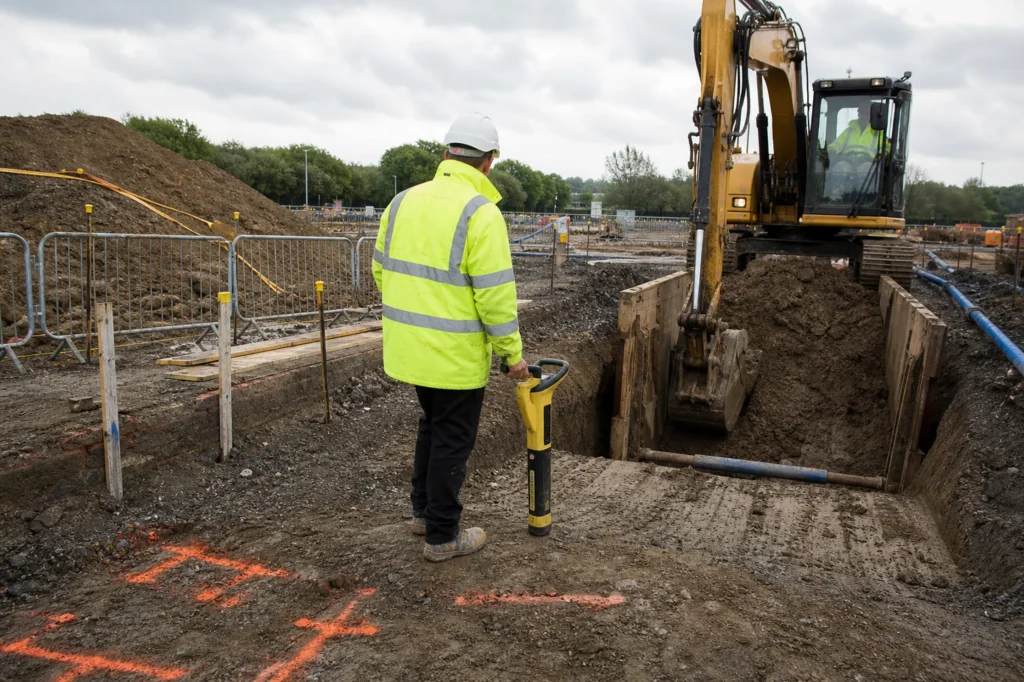
Groundworks Insurance: Cover for Site Risks.
Executing substructure operations requires robust groundworks insurance to protect contractors against catastrophic financial loss from unseen below-ground hazards. Groundwork specialists face unique operational challenges, including buried service strikes, collapse of deep trenches, and structural damage to neighbouring properties. Insurers assess these risks rigorously because substructure failures frequently result in severe third-party property damage or personal injury claims. Precise policy terms keep groundwork businesses, civil engineering firms, and specialist plant operators resilient against expensive site liabilities.
Standard commercial insurance policies often exclude deep excavation, vibration damage, or underground utility strikes. Cover applies only where specific policy conditions are strictly fulfilled. Subcontractors must understand how policy warranties dictate daily site procedures during excavation works. Which insurance provisions and site controls must groundwork contractors implement on high-risk substructure projects?
Key Takeaways
- Groundwork contractors must maintain specialist public liability policies featuring clear extensions for deep excavation work, vibration damage, and underground utility service strikes.
- Policyholders must strictly comply with cable avoidance tool scanning warranties before breaking ground to avoid invalidating coverage during accidental utility strike incidents.
- Utilising the LinesearchBeforeUDig portal provides verified desktop utility plans, forming a critical evidentiary defence when proving compliance against third-party damage claims.
- Contractors all risks insurance protects works in progress, temporary structures, and site materials from accidental damage or site theft throughout construction phases.
- Hired-in plant cover coupled with continuing hire charge protection safeguards contractors against substantial financial liabilities under standard Construction Plant-hire Association conditions.
Essential Policy Structures for Civil Engineering Substructure Projects
Groundwork contractors require specialised insurance structures to manage severe site exposures. Standard trade policies frequently fall short when projects involve deep digging, heavy machinery, or complex utility networks. Evaluating core covers against contractual mandates ensures businesses maintain continuous legal compliance and operational resilience.
The summary table below details the primary insurance covers required for groundworks and civil engineering operations. It sets out core functions, common market indemnity limits, and standard underwriting conditions. Contractors must satisfy these conditions throughout active site works on commercial and infrastructure projects.
| Insurance Cover Type | Primary Operational Risk Protected | Common Market Limit and Condition |
|---|---|---|
| Public Liability Insurance | Third-party injury and property damage from excavation or service strikes | £5m to £10m; subject to depth limits and CAT warranties |
| Employers’ Liability Insurance | Operative injury or illness from trench collapse, manual handling, or machinery | £10m standard; statutory minimum £5m under the 1969 Act |
| Contractors All Risks | Physical loss or damage to works in progress, temporary works, and materials | Value of contract works; excludes defective design or materials |
| Plant and Machinery Cover | Theft or accidental damage to owned and hired-in excavation equipment | Plant replacement value plus continuing hire charge liability |
| Professional Indemnity | Design defects or soil specification errors in design-and-build contracts | £2m to £5m; essential where contractors offer technical advice |
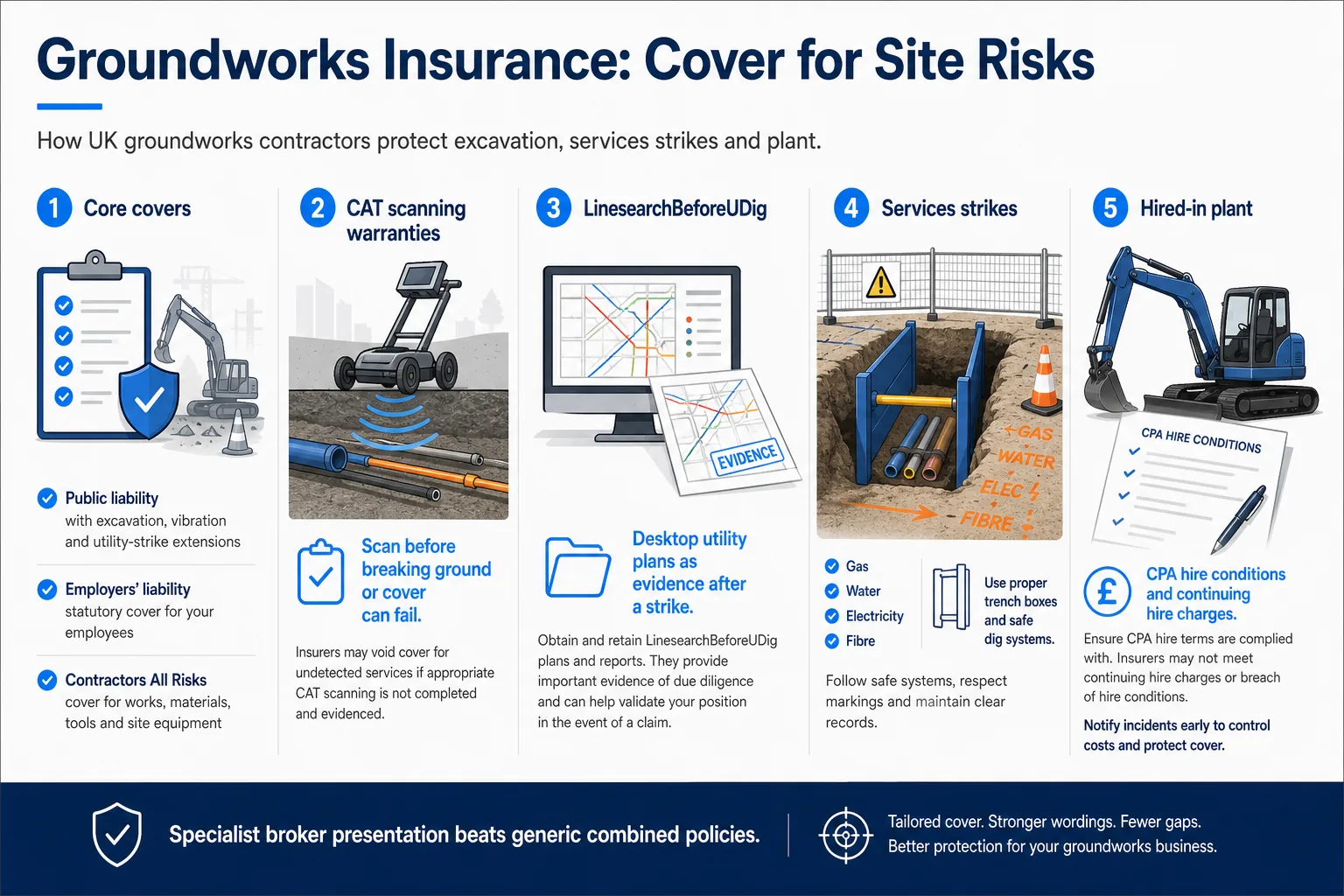
Excavation Hazard Underwriting and Substructure Liability
Underground Utility Strike Exposures
Excavation activities carry constant risks of striking buried gas mains, high-voltage electric cables, water pipes, and fibre optic networks. A single service strike can trigger catastrophic third-party property damage, severe disruption, and massive financial claims. Underwriters evaluate utility strike risks closely before issuing public liability terms to groundworks contractors.
Repair costs for severed high-voltage mains or fibre infrastructure routinely reach tens of thousands of pounds. Business interruption claims from affected neighbouring commercial properties can inflate total losses rapidly. Insurers require contractors to demonstrate rigorous risk management before providing comprehensive public liability protection.
Cable Avoidance Tool Compliance Warranties
Insurers enforce strict cable avoidance tool warranties on groundworks policies to ensure site operatives scan ground surfaces before digging. Policyholders must verify that calibrated scanning equipment is operated by trained personnel in accordance with statutory guidelines. Failing to observe cable scanning warranties can result in total repudiation of utility strike claims.
Standard conditions require scanning sweeps across all proposed excavation pathways prior to machine breaking. Site operatives must keep written calibration logs and scanning records on file for inspection following an incident. Proper documentation serves as key evidence that the contractor satisfied policy conditions prior to breaking ground.
Slope Stability and Soil Retention Risk Controls
Geotechnical Instability and Landslip Liabilities
Substructure excavations modify natural soil conditions and can trigger structural movement or ground failure on adjacent land parcels. Unintended landslips, embankment collapses, or retaining wall failures frequently cause extensive third-party property damage. Underwriters review ground retention protocols and soil stability assessments before binding cover for high risk liability insurance risks.
Geotechnical surveys provide essential data regarding soil load-bearing capacity, groundwater levels, and shear strength. Excavation adjacent to existing foundations requires engineered shoring or underpinning to prevent subsidence. Policies covering civil engineering insurance require contractors to strictly follow structural engineers’ design specifications during excavation phases.
Temporary Works and Trench Support Protocols
Deep excavations present severe safety hazards from sudden sidewall collapses that endanger site workers and neighbouring structures. Implementing certified trench support boxes, sheet piling, or hydraulic shoring systems remains mandatory under UK safety standards. Insurers demand clear compliance with temporary works management procedures before offering broad substructure liability insurance.
The Construction (Design and Management) Regulations 2015 require formal appointment of a Temporary Works Coordinator for complex excavation schemes. Daily trench inspections must be logged in accordance with legal requirements. Insurers review these inspection logs when assessing claims involving structural collapse or employee injury.
Did You Know?
Employers’ liability cover is compulsory under the Employers’ Liability (Compulsory Insurance) Act 1969. The statutory minimum is £5 million in respect of any one incident. The Health and Safety Executive can fine an uninsured employer up to £2,500 per day. A further fine of up to £1,000 applies where the certificate is not displayed.
Public Liability Limits and High Hazard Exposures
Third-Party Property Damage Thresholds
Groundwork operations carry elevated exposure to third-party property damage due to vibration, heavy machinery movement, and soil disturbance. Main contractors usually require groundwork subcontractors to carry indemnity limits of five million or ten million pounds. Structuring adequate primary and excess layer cover protects civil engineering businesses against multi-million-pound compensation claims.
Vibration from piling rig operations or heavy hydraulic excavators can cause cosmetic and structural cracking in neighbouring buildings. Pre-commencement dilapidation surveys record existing structural defects in surrounding properties before work starts. Establishing baseline condition reports prevents false third-party damage claims from being successfully brought against the contractor.
Deep Excavation Depth Limit Endorsements
Standard commercial public liability policies frequently contain strict depth limit exclusions capping excavation work at two or three metres. Groundwork contractors excavating past standard policy limits without explicit insurer endorsement risk operating without legal cover. Securing tailored policy terms removes depth restrictions to ensure full cover during deep drainage and piling works.
Underwriters evaluate the depth of trenching, basement excavation, and foundations when calculating policy premiums. Subcontractors must check all policy schedules to ensure depth extensions match contract specifications. Working beyond specified depth limits invalidates public liability protection across the entire site.
Cover Built for Demanding Businesses
Across high risk industries, the cover we arrange most often includes:
Public liability
Employers' liability
Motor fleet
Contractors' all risks
Freight liability
Professional indemnity
Environmental liability
Business interruption
Most businesses need a combination, rather than a single focus policy, and we build cover around your contracts, your workforce and your operational activities.
Pre-Excavation Verification to Prevent Service Strikes
Utility Plan Desktop Searches via LinesearchBeforeUDig
Obtaining statutory utility plans represents the critical initial phase of pre-excavation risk management for groundwork projects. Utilising search services like LinesearchBeforeUDig allows contractors to identify underground gas, electric, water, and telecom assets before breaking ground. Demonstrating thorough desktop utility searches strengthens legal defence positions against services strike claims.
Utility companies update underground asset maps regularly, making outdated plans unreliable for active construction sites. Insurers expect contractors to maintain up-to-date plan records on site throughout project lifecycles. Combining portal searches with physical site reconnaissance minimises accidental utility strike occurrences.
Trial Holes and Hand Digging Protocols
Health and Safety Executive guidance HSG47 mandates hand-digging trial holes to confirm exact utility locations prior to using mechanical plant. Using insulated hand tools within marked utility corridors reduces line strikes and prevents operative injuries. Following verified hand-digging procedures ensures compliance with standard public liability policy conditions and statutory duties.
Mechanical excavators must maintain minimum exclusion distances from confirmed underground utilities until visual identification occurs. Operatives digging near high-voltage cables or high-pressure gas lines require specialist protective equipment. Documenting trial hole locations on site plans provides clear evidence of adherence to safe digging practices.
Contractual Obligations and Contract Works Insurance
Contractors All Risks Coverage Mechanics
Contractors All Risks insurance provides physical damage protection for permanent and temporary contract works during construction phases. Substructure projects remain vulnerable to extreme weather, flooding, land movement, and accidental site damage before handover. Maintaining robust contract works cover ensures financial stability if substructure elements suffer severe physical loss during installation.
Under standard JCT or NEC contract forms, responsibility for contract works damage is clearly allocated between employers and contractors. Joint-names clauses protect both parties under a unified policy schedule. Groundwork contractors must ensure policy limits match maximum potential loss values across active project portfolios.
Subcontractor Flow-Down Liability Terms
Main contractor subcontracts frequently pass strict indemnity requirements down to groundwork specialists undertaking civil engineering works. Subcontractors must ensure their high risk liability insurance terms match contractual indemnity obligations specified in main contracts. Cover gaps between main contract terms and subcontractor insurance policies create significant uninsurable commercial liabilities.
Standard flow-down clauses require minimum indemnity limits, specific policy endorsements, and subrogation waivers. Groundwork specialists should submit subcontract insurance schedules to specialist brokers for review before signing contracts. Professional contract review prevents unintended exposure to uninsured financial liabilities.
Plant, Equipment and Continuing Hire Charge Cover
Hired-In Heavy Plant Conditions and Liabilities
Groundwork contractors rely extensively on hired excavators, dumpers, piling rigs, and compaction machinery to execute substructure operations. Operating plant under Construction Plant-hire Association model conditions shifts full financial responsibility for machine damage or theft onto the hirer. Maintaining comprehensive hired-in plant insurance protects businesses against heavy physical asset loss.
Standard plant hire conditions dictate that contractors pay ongoing hire fees whilst damaged machinery undergoes repair. Continuing hire charge extensions pay these ongoing financial obligations during equipment downtime. Policy limits must reflect maximum plant values on site alongside potential continuing hire charges.
Statutory Inspections and Breakdown Exclusions
Lifting equipment used in groundwork operations requires statutory inspection under Lifting Operations and Lifting Equipment Regulations 1998 standards. Heavy plant policies routinely exclude internal mechanical breakdown unless specific engineering cover is arranged. Fulfilling statutory inspection requirements keeps equipment compliant whilst maintaining valid insurance cover across operational fleets.
Thorough examinations must be performed by competent independent engineering surveyors at required statutory intervals. Inspection reports must be retained on site for regulatory compliance checks. Unchecked lifting machinery risks immediate prohibition notices from safety inspectors alongside claim rejections following site accidents.
Environmental Pollution and Site Contamination Cover
Sudden and Accidental Pollution Extensions
Excavation machinery operations present constant environmental risks from sudden hydraulic hose bursts, fuel tank ruptures, or oil spills. Standard public liability policies provide limited protection restricted strictly to sudden, identifiable, and unintended pollution incidents. Contractors require specific environmental extensions to cover emergency site containment and initial clean-up costs.
Accidental fuel leaks penetrating surrounding soil or drainage systems trigger immediate statutory clean-up requirements under Environmental Protection Act 1990 rules. Emergency response costs escalate quickly when spillages reach local waterways. Maintaining adequate sudden pollution limits protects businesses against severe statutory fines and environmental remediation expenses.
Gradual Contamination and Remediation Statutory Duties
Substructure works on brownfield sites can disturb pre-existing soil contaminants, causing gradual migration of hazardous substances into watercourses. Standard public liability policies exclude gradual pollution, leaving contractors exposed to major environmental liabilities. Stand-alone environmental impairment insurance covers statutory remediation obligations under the Environmental Damage Regulations 2015.
Regulators can enforce strict clean-up orders against site developers and main contractors regardless of fault. Stand-alone environmental policies cover own-site clean-up, third-party remediation, legal defence costs, and environmental damage restoration. Contractors working on brownfield or contaminated land must evaluate stand-alone environmental risk cover.
Final Thoughts
Arranging comprehensive groundworks insurance requires aligning policy structures with actual site risks, depth requirements, and contractual obligations. Substructure contractors face complex risks from utility strikes, soil instability, plant theft, and environmental contamination. Maintaining structured public liability, contractors all risks, and plant protection ensures complete operational stability across active construction projects.
Proactive risk management, accurate site documentation, and strict adherence to utility scanning warranties protect contractors against catastrophic financial exposure. Reviewing policy schedules against main contract schedules prevents coverage gaps before breaking ground on substructure developments.
Speak to an Insurance Specialist
Whether you need a new quote, want to discuss your renewal or have a question about an existing policy, our team is here to help.
Frequently Asked Questions
Q: What standard indemnity limit is required for groundworks public liability insurance?
A: Main contractors typically require groundwork specialists to hold five million or ten million pounds of public liability cover. The required limit depends on project scope, proximity to existing structures, and contract terms. Excess layer liability policies can sit above the primary policy where higher limits apply. Major infrastructure and commercial developments frequently demand these higher contractual limits. Brokers should confirm the required limit before tendering.
Q: How do cable avoidance tool warranties affect service strike claims?
A: Cable avoidance tool warranties require site personnel to scan excavation paths before breaking ground. Scanning must use calibrated equipment operated by trained operatives. Insurers request written scanning logs and calibration certificates following a utility strike claim. Failure to comply with CAT scan warranties can lead insurers to repudiate the claim. The same applies where required desktop plan reviews were not carried out. Third-party property damage claims can then be declined entirely.
Q: Is deep excavation covered under standard groundwork policies?
A: Standard commercial liability policies frequently impose depth exclusions, often limiting excavation work to two or three metres. Groundwork contractors working on deep foundations, drainage, piling, or basements must secure explicit depth extensions from underwriters. Working beyond specified depth limits without an endorsement leaves the contractor uninsurable. Injury and property damage claims arising from deep substructure work would then fall on the business. Brokers should confirm the stated depth on the policy schedule before site mobilisation.
Q: Why is hired-in plant insurance necessary for groundwork contractors?
A: Plant hire agreements operated under Construction Plant-hire Association conditions transfer liability for machinery damage, loss, or theft onto the hirer. Standard public liability policies do not cover hired machinery. Hired-in plant insurance covers physical damage to the machine itself. It also covers continuing hire charges, which are the ongoing fees owed to the plant owner. Those charges continue whilst the equipment undergoes repair following an incident.
Q: Does standard public liability cover gradual environmental contamination?
A: Standard public liability policies restrict pollution cover strictly to sudden, identifiable, and accidental events. Gradual contamination is excluded entirely. Groundwork contractors working on brownfield or contaminated sites face statutory clean-up liabilities under the Environmental Damage Regulations 2015. Those duties apply where pre-existing pollutants migrate into soil or watercourses. Covering gradual pollution and statutory environmental remediation requires stand-alone environmental impairment liability insurance. Cover should be arranged before excavation begins.
About The Author
Darren Judd
Director, Co-Founder and Co-Owner of Capital Corporate Risks Ltd

Experienced Account Executive with a demonstrated history of working in the insurance industry. Skilled in Account Management, Risk Management, Business Development across all classes of insurance within the Construction Industry,