
Fleet Insurance: Cover for Multi-Vehicle Fleets
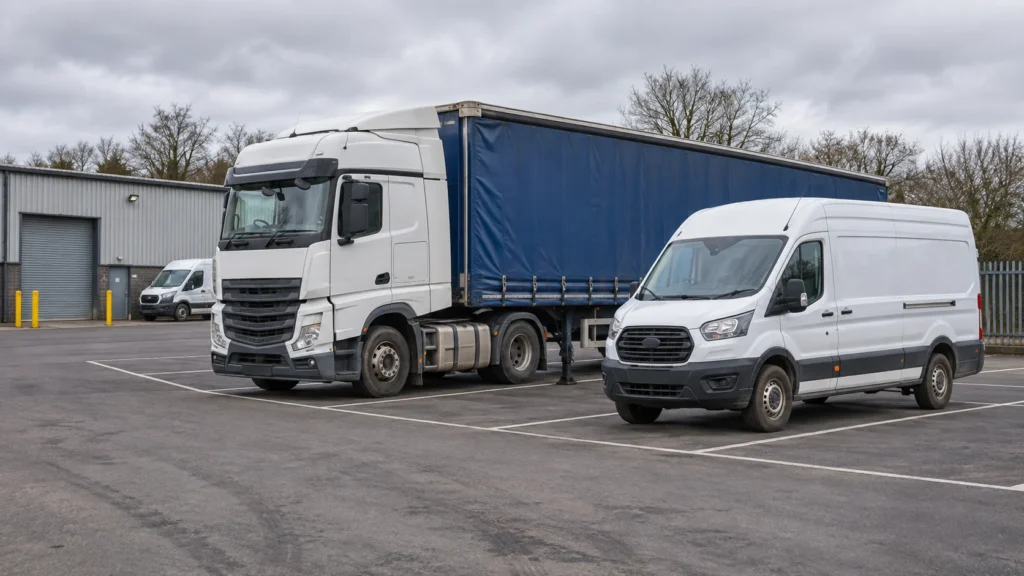
Running a commercial transport operation demands reliable protection across every vehicle category. Light delivery vans and heavy articulated lorries carry very different exposures. Holding those assets on one fleet insurance policy cuts administration and standardises legal protection. Instead of juggling separate policies with conflicting renewal dates, operators secure uniform terms that absorb operational change. A single schedule also tightens cost control and keeps the whole roster compliant with the Road Traffic Act 1988.
Mixed asset profiles call for close attention to policy structure, continuous regulatory compliance and firm driver risk controls. Premium inflation and third-party claims costs both continue to climb. So how should a transport manager balance day-to-day operational flexibility against rising premium expenditure, whilst protecting the business from inflated claims and unplanned vehicle downtime?
Key Takeaways
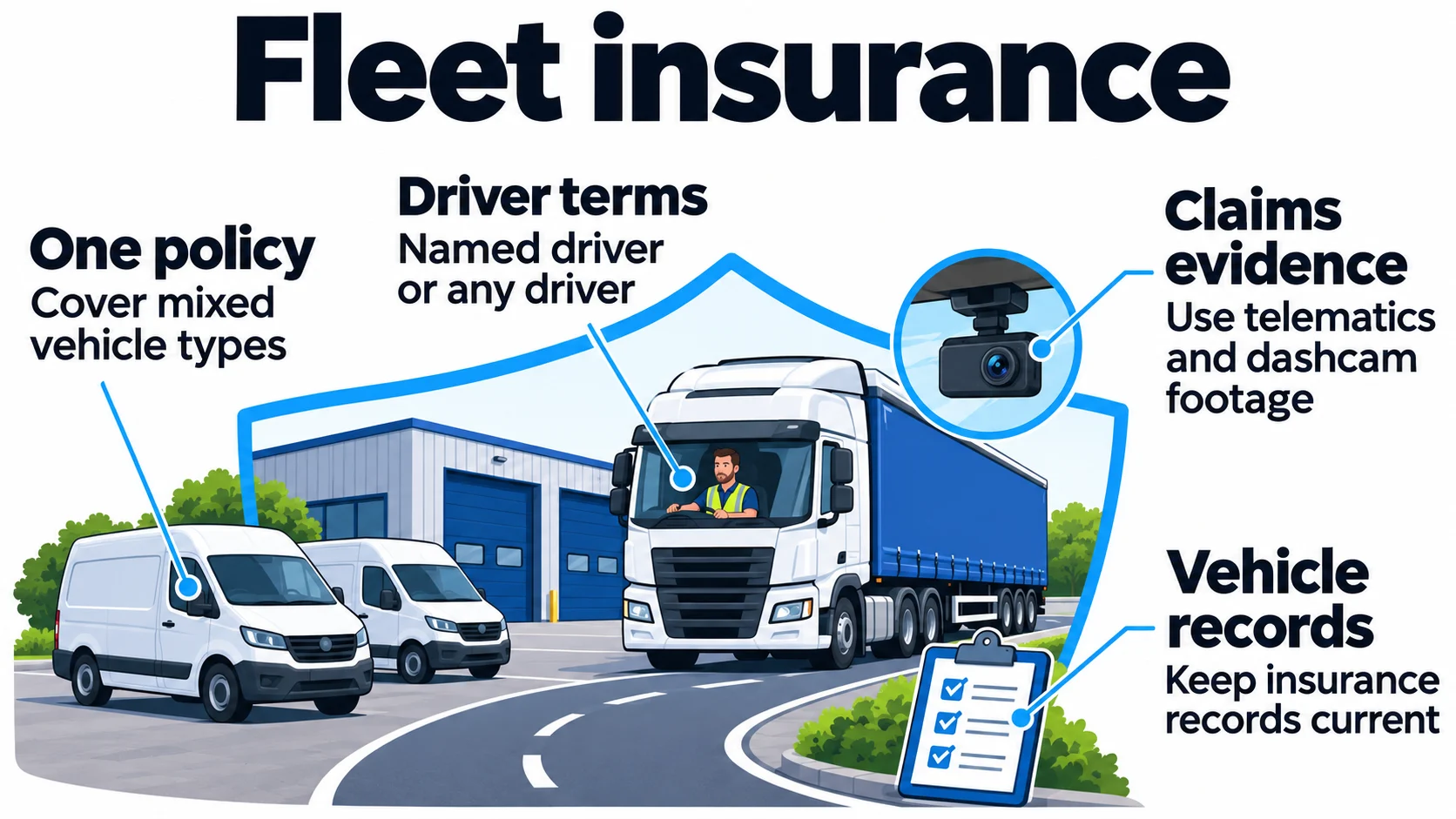
- Fleet policies consolidate multiple vehicle types under a single renewal schedule, reducing administration and providing uniform liability cover across all business operations.
- Choosing between named driver and any driver terms dictates daily flexibility, premium calculation and the minimum age restrictions applied to your vehicles.
- Keeping the Motor Insurance Database current is mandatory under Continuous Insurance Enforcement rules and prevents fixed penalties, clamping and prosecution.
- Commercial telematics and dashboard cameras supply objective evidence that speeds up settlement and protects operators from disputed fault and exaggerated claims.
- Structured quarterly claims reviews let operators track loss ratios, identify recurring liabilities and negotiate better underwriting terms at renewal.
Commercial Vehicle Protection at Scale
Commercial vehicle programmes shield the balance sheet from statutory liabilities and physical asset damage. Matching cover tiers to operational demand ensures that HGVs, vans and specialist plant each receive adequate indemnity without paying for cover they never use. The table below sets out the core policy components and operational attributes found across commercial fleet structures.
Every tier carries its own operational obligations and needs specific administrative controls to stay legally compliant. Underwriters assess vehicle utility, annual mileage and driver qualification standards before committing capacity to a schedule. Reviewing these baseline parameters allows an operator to weigh upfront policy expenditure against longer-term risk exposure across the whole fleet.
| Vehicle Asset Category | Standard Coverage Scope | Primary Underwriting Focus |
|---|---|---|
| Vehicle Asset CategoryLight Commercials (Vans) | Standard Coverage ScopeComprehensive physical and third-party damage | Primary Underwriting FocusMulti-drop delivery frequency and urban congestion exposure |
| Vehicle Asset CategoryHeavy Goods Vehicles (HGVs) | Standard Coverage ScopeStatutory road liability and accidental damage | Primary Underwriting FocusDriver hours compliance, tachograph records and carriage contracts |
| Vehicle Asset CategoryCompany Cars | Standard Coverage ScopeComprehensive cover with business travel extension | Primary Underwriting FocusCommuting patterns, driver age thresholds and total mileage |
| Vehicle Asset CategorySpecial Types and Mobile Plant | Standard Coverage ScopeRoad-transit liability and road risk indemnity | Primary Underwriting FocusRoad Traffic Act compliance and secondary site operation split |
| Vehicle Asset CategoryMixed Fleet Portfolios | Standard Coverage ScopeUnified blanket cover across multiple vehicle classes | Primary Underwriting FocusClaims frequency, historical loss ratios and driver vetting systems |
Core Policy Frameworks for Mixed Fleets
Comprehensive Third-Party and Accidental Damage Protections
Comprehensive motor fleet insurance protects against accidental damage, fire, theft and third-party road liabilities. The Road Traffic Act 1988 sets the statutory floor. Bodily injury cover is unlimited, and property damage cover must reach at least £1.2 million. Comprehensive terms extend that protection to write-offs, legal expenses and large compensation claims.
High-value commercial vehicles need robust physical damage limits that reflect current repair costs. Advanced driver assistance systems, sensor recalibration and specialist components have all pushed UK repair invoices higher. A windscreen replacement on a camera-equipped tractor unit now carries a calibration charge too. Operating without comprehensive physical damage cover leaves the business absorbing those capital losses directly.
Named Driver Versus Any Driver Arrangements
An any driver fleet insurance policy offers far greater agility for businesses running rotating shifts or frequent staffing changes. The structure permits authorised employees who meet pre-agreed licence criteria to operate designated vehicles. Operators therefore avoid notifying insurers before every temporary driver substitution, which matters on busy transport routes.
Named-driver schedules work differently. Each individual operator must appear on the policy register. Restricting risk to vetted individuals does reduce premium, yet it constrains daily operations. A sudden vehicle switch or an agency hire demands immediate notification, or the driver is uninsured. In practice, we find the decision turns on how often the driver roster actually changes.
Did You Know?
Under Continuous Insurance Enforcement, the registered keeper of an uninsured vehicle with no valid Statutory Off Road Notification faces a £100 fixed penalty from the DVLA, reduced to £50 if paid early. Unpaid penalties go to the magistrates’ court, where the maximum fine rises to £1,000. The vehicle may also be clamped, seized and destroyed.
Administrative Efficiency and Mid-Term Adjustments
Continuous Insurance Enforcement and Motor Insurance Database Compliance
Continuous Insurance Enforcement rules require commercial operators to keep accurate vehicle records on the Motor Insurance Database. Failing to register additions or deletions promptly invites fixed penalty notices or vehicle impoundment. Disciplined administrative reporting is therefore an indispensable safeguard for any fleet manager who wants to avoid enforcement disruption.
The Motor Insurers’ Bureau depends on prompt commercial updates to maintain accurate UK road records. Automatic number plate recognition cameras flag unlisted vehicles instantly and prompt roadside stops. A fully insured vehicle still risks seizure if administrative delay leaves it off the central database. Direct digital data feeds between broker and insurer remove most of that risk.
Fleet Additions and Deletions Protocol
Handling mid-term adjustments efficiently keeps cover seamless as a business buys new assets or disposes of older units. Established protocols let operators lodge vehicle changes through digital portals or scheduled declaration models. That practice prevents cover lapses and produces accurate pro-rata premium adjustments across the active policy term.
Larger operations often use monthly declaration policies. Operators submit a monthly asset schedule rather than reporting every individual vehicle movement. The insurer then adjusts the final premium at year-end, based on actual vehicle days on cover. This protocol cuts administrative hours sharply for growing fleets with high asset turnover.
Cover Built for Demanding Businesses
Across high risk industries, the cover we arrange most often includes:
Public liability
Employers' liability
Motor fleet
Contractors' all risks
Freight liability
Professional indemnity
Environmental liability
Business interruption
Most businesses need a combination, rather than a single focus policy, and we build cover around your contracts, your workforce and your operational activities.
Telematics Integration and Operational Risk Profiling
Real-Time Behaviour Tracking and Incident Recording
Commercial telematics hardware gives fleet managers granular insight into driver behaviour on every route. Tracking units record harsh braking, rapid acceleration, speeding events and excessive idling. Forward-facing cameras add indisputable digital evidence. Managers can then reconstruct collision dynamics quickly and refute fraudulent third-party allegations without a prolonged dispute.
Video telematics systems send immediate First Notification of Loss alerts when impact sensors detect severe deceleration. Rapid access to footage lets operators review an incident within minutes rather than waiting weeks for a police report. That transparency establishes liability early. It also protects commercial drivers against false fault claims and keeps the distribution network running.
Premium Mitigation Through Actionable Telematics Data
Underwriters increasingly reward operators who feed live telematics data into targeted driver coaching programmes. A steady downward trend in high-risk driving events gives the operator quantifiable leverage at renewal. Insurers translate improved safety metrics directly into lower loss projections, reduced policy excesses and more competitive fleet premium rates.
Incentivising safe driving through internal league tables builds an accountable operational culture. Drivers who understand that telemetry affects company overheads take more care on public roads. Reduced wear on tyres, brakes and drivetrains then compounds the insurance saving. From experience across the sector, the maintenance benefit often arrives before the premium benefit does.
Driver Vetting and Regulatory Compliance
Licence Verification and Medical Standards Auditing
Rigorous driver vetting protects commercial operators from underwriting non-compliance and serious legal penalties. Regular electronic checks through the Driver and Vehicle Licensing Agency confirm current licence entitlements. These audits also verify that drivers hold acceptable penalty point totals and meet the mandatory medical standards for heavy commercial vehicle operation.
Insurers impose strict warranty conditions on driver eligibility. Employing an operative with undisclosed convictions or a revoked medical entitlement can void cover entirely. Automated checking software audits licence records at set intervals and alerts management to endorsements picked up outside working hours. Systematic verification keeps the business inside its policy conditions.
Drivers’ Hours and Working Time Rules
Strict compliance with retained EU Regulation 561/2006 stops driver fatigue compromising safety across a distribution network. Transport managers must run systematic digital tachograph audits. Unchecked hours breaches can jeopardise an Operator Licence, trigger Traffic Commissioner intervention and, in serious cases, undermine indemnity under commercial motor contracts.
The Goods Vehicles (Licensing of Operators) Act 1995 places direct legal accountability on the transport manager for roadworthiness and driver conduct. Insurers read regulatory censure from a Traffic Commissioner as evidence of systemic operational failure. Aligning internal procedures with recognised standards, such as the DVSA Earned Recognition Scheme, reassures underwriters about compliance.
Claims Management Protocols and Incident Reporting
First Notification of Loss Speed and Third-Party Capture
Prompt incident reporting remains the single most effective lever for containing commercial motor claim costs. Immediate notification lets the insurer intervene within hours of a collision. Claims handlers can then capture third-party repairs and replacement hire before credit hire organisations inflate the total liability with exorbitant rental charges.
Credit hire companies actively target commercial accidents to supply replacement vehicles at non-standard credit rates. Delayed reporting leaves the insurer unable to intervene, and third-party costs escalate quickly. A simple roadside protocol, where drivers report every incident before leaving the scene, protects the business against the claims inflation that damages annual loss ratios.
Quarterly Claims Reviews and Defensible Record Keeping
Quarterly claims reviews let fleet operators audit active reserves and challenge open files before renewal negotiations begin. Scrutinising outstanding claims figures alongside specialist advocates stops inflated estimates distorting the overall loss ratio. That oversight protects the business from unjustified premium surcharges and rating increases it has not actually earned.
An outstanding reserve is only an insurer’s estimate of potential liability, yet it suppresses underwriting performance until the file closes. Aggressive advocacy against exaggerated third-party claims therefore pays twice. Systematic review ensures closed claims reflect actual payments rather than legacy reserves, which presents an accurate risk profile when approaching the commercial market.
Mixed-Asset Composition and Specialised Machinery
Heavy Goods Vehicles Alongside Light Commercials
Consolidating articulated lorries, rigid distribution vehicles and light vans under one master policy requires bespoke underwriting parameters. Each category presents a distinct exposure profile. Urban delivery vans face frequent low-speed impact hazards. Articulated transport, by contrast, brings severe highway exposure and costly recovery operations whenever a collision occurs.
Operators running mixed fleets must pair motor cover with specialised transport protections. A vehicle schedule alone does not insure the load. Carriage liabilities need haulage cover, and multi-drop delivery networks need goods in transit protection written to match the contracts in force. Integrating these covers keeps protection continuous across every distribution phase.
On-Road Plant and Agricultural Machinery Coverage
Operating mobile plant or agricultural machinery on public highways triggers compulsory road insurance under the Road Traffic Act 1988. Bringing these specialised units onto a central commercial fleet schedule guarantees statutory third-party road compliance. The unified arrangement also bridges cover between road transit phases and active work on operational sites.
Standard motor policies cover road transit risk but exclude working-risk liabilities once machinery operates as a tool on site. Operators must also keep lifting equipment inspections under the Lifting Operations and Lifting Equipment Regulations 1998 valid and recorded. A coordinated programme aligns road traffic cover with dedicated plant cover and prevents liability gaps during site operations.
Underwriting Considerations and Experience Rating
Fleet Rating Formulas and Historic Loss Ratios
Insurers price commercial fleets above roughly five units using bespoke experience rating rather than standard no-claims discounts. Underwriters build annual terms by analysing three to five years of verified claims experience. They weigh total claims paid and outstanding reserve figures directly against the historical earned premium for the account.
The resulting loss ratio decides whether an operator earns a renewal discount or absorbs a punitive surcharge. A loss ratio held consistently below 60% signals a profitable, well-managed fleet and commands competitive terms. Rising claims frequency erodes underwriter confidence quickly. Meticulous incident logs and proactive driver management preserve an attractive risk profile.
Risk Management Interventions That Impress Underwriters
Documented risk control measures shape underwriter sentiment and premium terms during annual market placement. Accreditation such as the Fleet Operator Recognition Scheme signals an established safety culture. Showing a risk assessor that the business actively manages vehicle maintenance, driver wellbeing and roadside incident response generates tangible pricing advantages at renewal.
Underwriters also look favourably on internal policies governing mobile phone use, substance screening and adverse weather operations. Evidence of regular toolbox talks and post-incident driver debriefs shows that accidents are treated as learning opportunities. These structured interventions separate professional operators from high-risk fleets and secure access to premier underwriting markets.
Final Thoughts
Managing commercial vehicle operations across the UK requires an integrated approach to fleet insurance. Operational agility, driver accountability and regulatory compliance all pull on the same schedule. As transport networks diversify to include electric vans, articulated HGVs and specialised plant, off-the-shelf policies rarely provide adequate protection. Resilience depends on multi-asset schedules that close cover gaps whilst controlling administrative cost.
Sustained profitability in transport logistics demands continuous attention to incident prevention and loss ratio preservation. Fleet managers who adopt telematics, enforce comprehensive driver vetting and challenge open reserves negotiate from a stronger position. Proactive risk management turns vehicle insurance from an unpredictable overhead into a strategic safeguard that supports long-term commercial growth.
Speak to an Insurance Specialist
Whether you need a new quote, want to discuss your renewal or have a question about an existing policy, our team is here to help.
Frequently Asked Questions
Q: How many commercial vehicles are needed to qualify for a fleet policy?
A: Most UK commercial insurers set fleet rating eligibility at a minimum of two to five vehicles. Mixed portfolios of company cars, car-derived vans and heavy goods vehicles can sit on a single schedule. Once the vehicle count passes around ten units, insurers usually move away from individual vehicle rating. Pricing then reflects the organisation’s own claims history rather than individual no-claims discount entitlements.
Q: What is the primary difference between named driver and any driver cover?
A: A named driver policy restricts vehicle operation to the individuals listed on the certificate, which usually reduces premium. An any driver fleet policy allows any qualified employee to drive any scheduled vehicle, subject to conditions such as minimum age or licence tenure. That flexibility suits multi-shift transport operations. Underwriters charge a higher baseline premium in return, because the driver pool is not individually vetted.
Q: How does failing to update the Motor Insurance Database affect businesses?
A: Failing to update vehicle records promptly breaches Continuous Insurance Enforcement rules and exposes the operator to statutory penalties. Unregistered vehicles trigger automated warnings from the DVLA. Fixed penalty fines, keeper prosecutions and roadside impoundment can follow, often prompted by automatic number plate recognition cameras. Cover disputes may also arise if an unlisted vehicle becomes involved in a serious third-party collision.
Q: Can specialised site plant be included on a standard motor fleet policy?
A: Site machinery and mobile plant can join a commercial fleet policy where they need road transit under the Road Traffic Act 1988. The fleet policy satisfies compulsory third-party road risk during highway transit only. Site-working risks, lifting operations and hired-in plant liabilities need separate contractors all risks or engineering cover. Standard motor contracts routinely exclude site damage, so operators should confirm where the motor schedule stops and the plant policy begins.
Q: How does commercial telematics data influence annual fleet renewal premiums?
A: Underwriters assess telematics data at renewal because driver behaviour correlates closely with claims frequency and severity. Operators showing effective speed management, fewer harsh braking events and disciplined tachograph compliance present a lower loss risk. Dashcam footage also enables rapid repudiation of fraudulent third-party claims. Presenting that evidence at renewal review supports competitive terms, reduced deductibles and smaller premium adjustments. Coaching records showing improvement over time carry more weight than raw data alone.
About The Author
Darren Judd
Director, Co-Founder and Co-Owner of Capital Corporate Risks Ltd

Experienced Account Executive with a demonstrated history of working in the insurance industry. Skilled in Account Management, Risk Management, Business Development across all classes of insurance within the Construction Industry,