
High Risk Industry Insurance: Sector Guide
Operating across hazardous sectors requires a precise approach to commercial protection. Physical danger, substantial assets, and complex statutory duties constantly intersect. Standard commercial packages fail to address the catastrophic severity risks inherent to heavy operations. Securing adequate high risk industry insurance requires businesses to articulate operational controls effectively. Companies must satisfy demanding technical underwriting criteria. They must also assemble layered covers that guard balance sheets against sudden ruin. Without specialised placement, unhedged operational exposures rapidly threaten corporate survival.
Mainstream underwriters routinely decline hazardous activities. Insurers often attach severe warranties that negate indemnity when major incidents occur. How can industrial contractors, logistics fleets, and waste operators manage strict policy conditions effectively? Can specialist firms negotiate fair terms and structure resilient liability programmes that safeguard continuity against catastrophic claims?
Key Takeaways
- Hazardous trade operations demand bespoke policy wordings because standard commercial packages contain strict height, depth, and heat warranties that exclude core activities.
- Tier 1 construction contracts frequently require specialist contractors to maintain substantial excess layer liability limits reaching twenty-five million pounds or higher.
- Waste and recycling facilities face severe market capacity restrictions, making formal fire prevention plans and thermal monitoring vital for securing adequate property protection.
- Transporting abnormal loads under Special Types General Orders requires comprehensive motor fleet extensions alongside tailored goods in transit cover for catastrophic cargo losses.
- Effective placement relies on presenting audited risk management protocols, verified operative competency records, and clean statutory compliance histories to specialist underwriters.
Sector Risk Exposures and Baseline Requirements
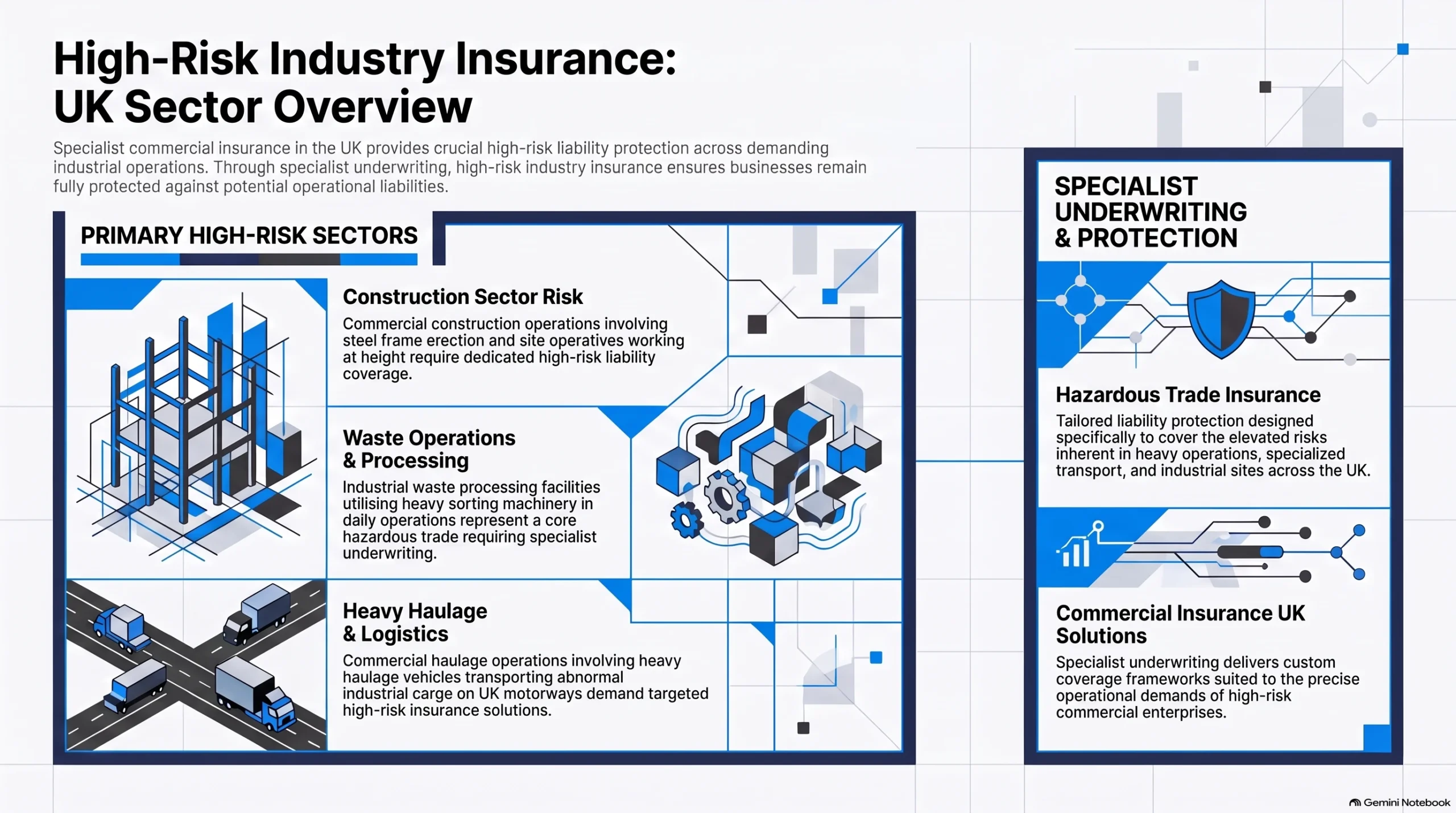
High-hazard industries present loss profiles characterised by low frequency but extreme severity. Conventional composite insurers lack appetite for these exposures, compelling firms to seek specialist underwriting markets. Establishing baseline coverage requires evaluating specific statutory triggers, contract flow-down requirements, and unique perils associated with site activities.
The following table details primary risk factors, standard indemnity benchmarks, and core statutory frameworks across major UK hazardous sectors. Each sector demands customised policy extensions to eliminate dangerous coverage gaps. Standard commercial terms routinely exclude these critical perils. Specialist brokers structure bespoke wordings to preserve balance-sheet resilience.
| Sector | Primary Risk Profile | Standard Cover Stack |
|---|---|---|
| Specialist Construction | Structural collapse, falls from height, hot work fires | Public liability, CAR, plant, excess layer |
| Demolition & Asbestos | Uncontrolled collapse, toxic fibre release, dust damage | High risk liability insurance, EIL, plant |
| Waste & Recycling | Bulk material fires, lithium battery ignition, environmental spills | Property, business interruption, environmental liability |
| Heavy Transport & Haulage | Abnormal load overturns, bridge strikes, hazardous cargo leaks | Fleet, carriers liability, environmental impairment |
High Risk Construction and Structural Engineering
Working at Height and Structural Demands
Contractors working on high-rise structures face stringent height limitations under standard public liability policies. Standard commercial wordings frequently exclude operations above ten or fifteen metres. Specialist policies remove these artificial restrictions. They endorse unrestricted height provisions supported by site-specific risk assessments and method statements. This approach protects complex access operations.
Compliance with the Work at Height Regulations 2005 forms the foundation of insurability. Underwriters examine operative accreditations, including Construction Industry Scaffolders Record Scheme cards. They also check adherence to NASC technical guidance documents such as TG20 and SG4. Subcontractors must align their limits with main contractor requirements. Major schemes frequently mandate indemnity levels of ten million pounds or higher.
Groundworks and Subterranean Hazards
Excavation, piling, and underpinning operations carry severe subterranean perils. Strikes on buried utility infrastructure and adjacent structural movement are common. Standard commercial policies frequently exclude vibration, weakening, or removal of support. Hazardous trade insurance addresses these exposures through specialised endorsements. These extensions explicitly accommodate deep excavations and ground displacement risks.
Underwriters scrutinise adherence to Health and Safety Executive guidance note HSG47. Operators must demonstrate systematic pre-commencement procedures. These include electromagnetic location scanning and consultation of mapping platforms like LinesearchBeforeUDig. Compliance with the Party Wall etc. Act 1996 is equally critical. Rigorous surveying protocols prevent catastrophic indemnity disputes if structural settlement occurs.
Did You Know?
The Environmental Damage (Prevention and Remediation) (England) Regulations 2015 impose statutory liability for harm to protected species and habitats. Damage to water bodies falls within the same regime. Standard public liability policies almost universally exclude this liability unless dedicated environmental impairment cover sits alongside them.
Demolition and Controlled Decommissioning
Structural Collapse and Kinetic Energy Risks
Mechanical demolition presents immediate third-party property damage and catastrophic bodily injury risks. Standard public liability policies rarely accommodate induced collapse methods or heavy processing equipment. Specialised demolition placement requires detailed risk documentation. Brokers submit project method statements, adjacent property surveys, and formal notices under Section 80 of the Building Act 1984.
Insurers evaluate contractor membership in bodies like the National Federation of Demolition Contractors. Operatives should hold Certificate of Competence of Demolition Operatives cards. Primary public liability limits of ten million pounds serve as the standard threshold. Excess layers expand cover to twenty-five million pounds on urban projects. Contractors All Risks protects heavy excavators and shear attachments.
Hazardous Materials and Dust Suppression
Demolition activities inevitably disturb toxic contaminants, hazardous dust, and older structural insulation materials. Mainstream commercial liability policies broadly exclude chemical, mineral, and environmental contamination claims. Dedicated environmental liability extensions protect against these exposures. These extensions cover sudden releases of airborne particulates, ground pollution, and contaminated runoff across active sites.
Surveys conducted under the Control of Asbestos Regulations 2012 must precede structural interventions. When licensed contractors remove asbestos insulation board, their policies must explicitly endorse asbestos handling. Decommissioning waste must also satisfy the Duty of Care under Section 34 of the Environmental Protection Act 1990. Clear consignment notes ensure that statutory liabilities do not rebound upon contractors.
Cover Built for Demanding Businesses
Across high risk industries, the cover we arrange most often includes:
Public liability
Employers' liability
Motor fleet
Contractors' all risks
Freight liability
Professional indemnity
Environmental liability
Business interruption
Most businesses need a combination, rather than a single focus policy, and we build cover around your contracts, your workforce and your operational activities.
Waste Management and Resource Recovery
Fire Propagation and Bulk Storage Hazards
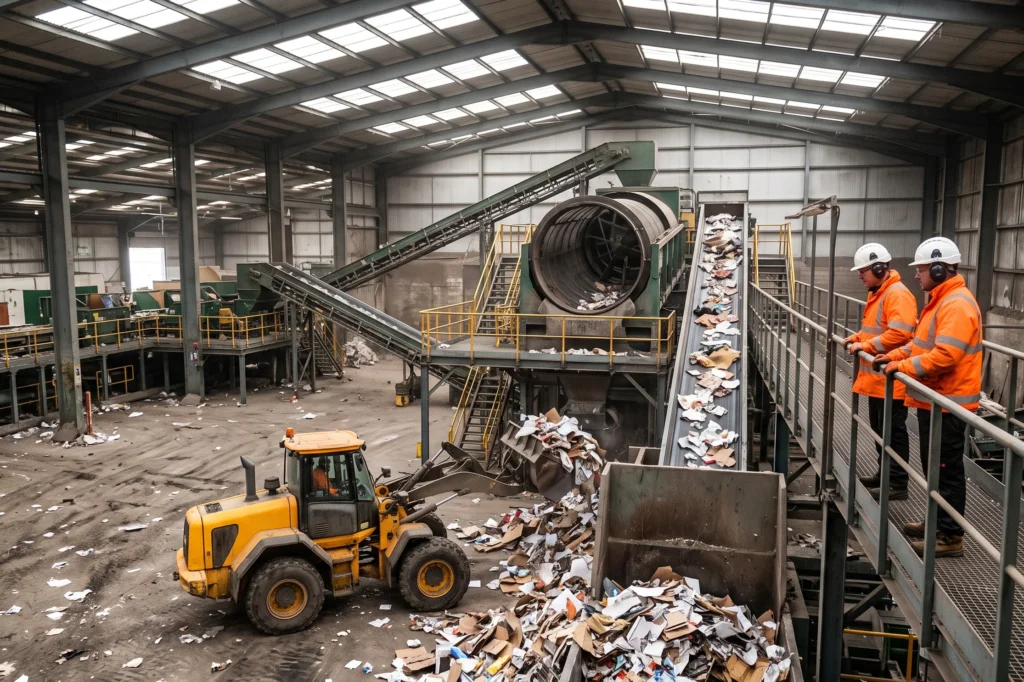
Waste transfer stations and materials recovery facilities present severe property and business interruption exposures. Combustible stockpile fires represent an existential threat across the sector. Mainstream insurers have largely withdrawn capacity following widespread losses. Sustainable placement requires strict adherence to Waste Industry Safety and Health Forum guidance and approved Fire Prevention Plans.
Lithium-ion battery contamination in commercial waste streams has heightened ignition frequencies. Insurers enforce strict pile dimensions and minimum separation distances. Regular thermal imaging inspections are also mandatory across tipping halls. Operators must maintain permits issued under the Environmental Permitting (England and Wales) Regulations 2016. Breaching permit conditions can lead underwriters to void claims following fires.
Environmental Impairment and Runoff Control
Firefighting water runoff and leachate discharge from recycling sites present grave threats to nearby watercourses and soil. Standard public liability policies restrict pollution cover to sudden and accidental events. This wording leaves gradual seepage unhedged. Stand-alone environmental impairment liability protects against statutory clean-up orders and long-term remediation costs.
Remediation notices issued under the Water Resources Act 1991 impose strict liability on polluters. Similar enforcement occurs under Part IIA of the Environmental Protection Act 1990. Specialised environmental policies respond to on-site decontamination directives issued by the Environment Agency. They also cover third-party off-site remediation costs. Facility operators must ensure policy wordings accommodate statutory biodiversity damage liabilities.
Heavy Haulage and Hazardous Transport
Abnormal Load Dimensions and Route Hazards
Haulage operators moving abnormal indivisible loads face severe third-party property damage risks. Bridge strikes and catastrophic highway blockages can quickly generate massive claims. Standard commercial vehicle policies exclude vehicles exceeding statutory gross weights. Specialist heavy haulage policies accommodate movements governed by the Special Types General Order.
Heavy transport operations require advance notifications submitted via the Electronic Service Delivery for Abnormal Loads system. Underwriters demand evidence of comprehensive route surveys and swept-path assessments. Professional escort vehicle protocols are also mandatory. Operators must secure property damage limits far above the Road Traffic Act 1988 baseline to absorb major bridge claims.
Hazardous Cargo and Spill Liabilities
Transporting dangerous goods exposes fleets to severe environmental contamination, chemical burns, and explosion risks during transit. Hauliers operating under the Carriage of Dangerous Goods regulations require dedicated ADR endorsements. These extensions cover catastrophic chemical spills, specialist decontamination costs, and emergency civil response expenses across UK transport networks.
Carriers must distinguish between basic carriers’ liability and comprehensive all-risks goods in transit cover. Standard contracts like the Road Haulage Association Conditions of Carriage cap financial liability per tonne. This leaves high-value industrial machinery substantially underinsured. Specialist transport brokers arrange bespoke cargo limits. They also structure hazardous goods liability extensions to fund environmental remediation.
High Risk Trades and Hot Works Exposures
Torch-On Roofing and Thermal Hazards
Commercial roofing operations involving open-flame application systems generate some of the highest fire loss frequencies in construction. General liability underwriters routinely insert restrictive hot work warranties that void cover if protocols lapse. Specialist roofing policies establish manageable compliance standards. They deliver reliable indemnity for high-temperature bitumen membrane installations.
Underwriting criteria demand formal adherence to permit-to-work systems. Operatives must maintain a continuous post-application fire watch lasting at least sixty minutes. Appropriate multi-class fire extinguishers must remain immediately adjacent to the work area. Roofing contractors must also secure endorsements covering incidental hazardous materials. Stripping older bitumen coatings containing asbestos requires explicit cover extensions.
Pressure Vessels and Mechanical Plant
Operating pressurised equipment, industrial steam plant, and heavy lifting machinery exposes facilities to mechanical failure and injury. The Provision and Use of Work Equipment Regulations 1998 mandates equipment integrity. Statutory inspections are also compulsory under secondary safety legislation. Dedicated engineering insurance bridges the critical gaps left by standard property policies.
Statutory examinations by competent persons under the Lifting Operations and Lifting Equipment Regulations 1998 are essential. Independent checks under the Pressure Systems Safety Regulations 2000 maintain policy validity. Engineering breakdown policies provide sudden damage protection. Standard material damage policies exclude mechanical breakdown as wear and tear. Hired plant users must also maintain continuing hire charges cover.
Layered Liability and Contractual Risk Transfer
Excess Layer and Primary Capacity Integration
Major commercial and public sector contracts regularly require liability limits exceeding primary market capacity. A contractor may hold five million pounds in primary public liability cover. Commercial clients frequently demand ten or twenty-five million pounds. Excess layer policies sit above the primary layer to absorb catastrophic claims without disrupting base terms.
Arranging effective excess protection requires absolute wording alignment between primary and secondary policies. If the underlying policy excludes specific operations, the excess layer will not respond. Wordings must operate on a strict follow-form basis. Brokers specialising in high risk liability insurance negotiate seamless layering. This structure ensures that indemnity limits step up automatically without restrictive gaps.
Contractual Indemnities and Standard Agreements
Hazardous contractors frequently sign complex standard contracts containing onerous risk transfer clauses. Standard commercial policies only indemnify liabilities that arise at common law, excluding assumed contractual commitments. Specialist policy endorsements bridge this contractual liability gap. These extensions ensure that policy terms match commercial obligations under standard construction and engineering agreements.
Contractors must review joint-names insurance requirements under JCT Option A, B, or C clauses. These clauses allocate works insurance responsibilities between employers and main contractors. Subcontractors face flow-down provisions requiring cross-liability clauses and explicit waivers of subrogation. An unreviewed subcontract can leave an operative personally liable for structural damage. Broker analysis of contract schedules is an essential risk discipline.
Specialist Underwriting and Risk Presentation
Operational Audits and Risk Articulation
Securing competitive terms in restricted hazardous markets depends directly on the technical quality of the broker presentation. Underwriters evaluate empirical safety data, employee accreditations, and formal operational methodologies. Turnover figures alone do not suffice. A thoroughly documented presentation transforms an unpalatable hazard into a transparent commercial proposition.
Brokers prepare comprehensive underwriting dossiers detailing certified management systems. These include ISO 45001 for health and safety and ISO 14001 for environmental management. Detailed claims analyses spanning at least five years must accompany the presentation. This provides narrative context around past incidents and demonstrates corrective actions. Underwriters reward transparent evidence with broader terms and sustainable excess levels.
Compliance Management and Statutory Duties
Corporate governance in hazardous sectors demands compliance with the Health and Safety at Work etc. Act 1974. Regulatory enforcement notices or criminal investigations can disrupt operations and compromise insurance coverage. Specialist placement incorporates corporate legal defence extensions. These extensions fund expert representation during formal health and safety investigations.
The Insurance Act 2015 establishes a strict duty of fair presentation of risk. Commercial policyholders must disclose every material circumstance that would influence a prudent underwriter. Clear documentation of operational changes, equipment upgrades, and safety audits protects the insured. This evidence refutes allegations of deliberate misrepresentation should an investigation follow an operational disaster.
Final Thoughts
Managing exposures across hazardous trades requires an insurance strategy that transcends standard off-the-shelf policies. Securing robust high risk industry insurance demands bespoke terms tailored to specific site activities, statutory obligations, and contractual liabilities. Heavy contractors, haulage fleets, and recycling operators must align safety protocols with layered insurance architecture.
Regulatory scrutiny continues to intensify under modern safety regimes and building standards. Commercial underwriters will demand increasingly rigorous operational transparency from hazardous businesses. Organisations that invest in verifiable safety systems, workforce certifications, and maintenance records will maintain distinct broking advantages. Proactive risk management remains the true foundation for long-term commercial survival.
Speak to an Insurance Specialist
Whether you need a new quote, want to discuss your renewal or have a question about an existing policy, our team is here to help.
Frequently Asked Questions
Q: What defines an industry as high risk for commercial insurance?
A: An industry counts as high risk when operations carry substantial potential for catastrophic injury or major property damage. Severe environmental contamination also defines these trades. Typical sectors include high-rise construction, demolition, asbestos abatement, waste recycling, and chemical transport. Underwriters assess the kinetic, thermal, and chemical energies involved in daily tasks. They also evaluate statutory compliance burdens. Because these operations exceed standard underwriting limits, they require bespoke policy wordings and warranties. Specialist syndicates are necessary to price these severe hazards accurately.
Q: Why do standard public liability policies fail to protect hazardous trades?
A: Standard public liability wordings rely on broad exclusions and restrictive warranties to control insurer exposure. They routinely exclude working at heights exceeding ten metres, operations involving naked flames, deep excavations, and hazardous material disturbance. If a roofing contractor triggers a fire during torch-on application, strict warranty breaches frequently invalidate the claim. The same danger applies when groundworkers strike buried services. Specialist policies explicitly overwrite these exclusions to ensure that routine hazardous operations remain fully indemnified.
Q: What minimum Employers’ Liability limit is required for hazardous operations in the UK?
A: Under the Employers’ Liability (Compulsory Insurance) Act 1969, UK employers must maintain at least five million pounds in cover. In hazardous industries, standard market practice dictates an entry-level limit of ten million pounds per occurrence. High-hazard environments expose operatives to severe crushing perils, falls from height, and long-tail industrial disease. Consequently, commercial clients, main contractors, and trade bodies mandate ten million pounds before granting site access.
Q: How do excess layer liability policies function on large industrial projects?
A: Excess layer policies provide additional indemnity capacity above primary liability limits. Consider a principal contractor requiring twenty million pounds in cover. A subcontractor with a five million pound primary policy can buy a fifteen million pound top-up layer. The excess policy operates on a follow-form basis. It responds only after underlying limits are exhausted. This arrangement delivers cost-effective catastrophic protection without disturbing the primary insurer’s underwriting structure.
Q: Why is environmental impairment liability necessary alongside standard public liability?
A: Public liability policies generally provide limited pollution coverage restricted to sudden and accidental incidents. They exclude gradual pollution, historical contamination, on-site clean-up costs, and statutory biodiversity damage. Under the Environmental Damage (Prevention and Remediation) (England) Regulations 2015, businesses face strict liabilities for environmental harm. Stand-alone environmental impairment liability bridges this protection gap. It covers legal defence costs, statutory remediation notices, and on-site decontamination. The policy also indemnifies third-party property damage arising from gradual or sudden operational pollution.
About The Author
Darren Judd
Director, Co-Founder and Co-Owner of Capital Corporate Risks Ltd

Experienced Account Executive with a demonstrated history of working in the insurance industry. Skilled in Account Management, Risk Management, Business Development across all classes of insurance within the Construction Industry,