
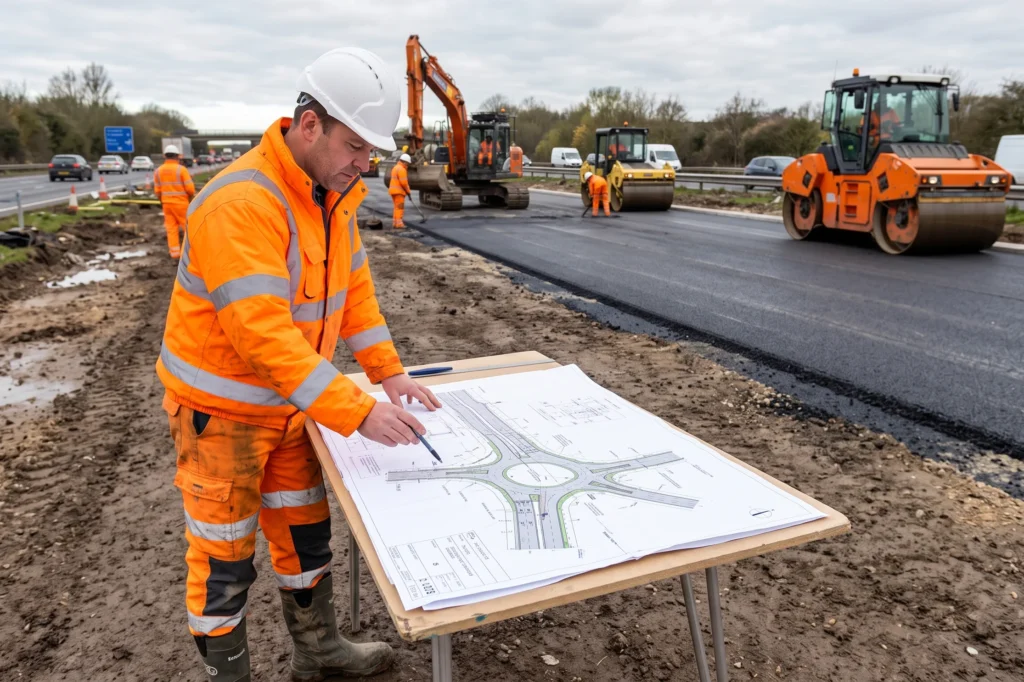
Civil Engineering Insurance: Cover for Projects
Major infrastructure schemes expose contractors to complex liabilities that differ fundamentally from standard building developments. Deep excavations, heavy earthworks, and complex temporary structures demand a carefully aligned insurance stack. Ground conditions, deep foundations, and work near existing utilities present substantial physical and financial exposures. Specialist civil engineering insurance keeps main contractors and subcontractors trading whilst satisfying strict contractual demands. An inadequate policy portfolio risks catastrophic loss from uninsured third-party damage or delay.
Procurement teams and developers require robust verification of indemnity limits before contractors access any site. Standard commercial policies frequently exclude critical hazards such as vibration damage, ground weakening, and underground services strikes. How can contractors structure their insurance programme to withstand both contractual scrutiny and catastrophic site incidents?
Key Takeaways
- Standard commercial policies fail to cover specialist civil works, requiring tailored programmes that address deep excavations, temporary works, and high-value machinery.
- NEC4 and JCT contracts mandate strict insurance arrangements, including joint-names provisions and specific minimum indemnity thresholds that contractors must rigorously satisfy.
- Contractors all risks insurance covers physical damage to permanent works, temporary structures, and materials stored off-site during ongoing civil engineering schemes.
- Ground utility strikes represent a frequent liability risk, making adherence to Health and Safety Executive HSG47 guidance vital for maintaining insurance validity.
- Contractors hiring equipment under CPA Model Conditions remain liable for ongoing hire charges during repairs, requiring dedicated hired-in plant protection.
Core Insurance Stack for Civil Engineering Schemes
Civil engineering contractors operate in high-hazard environments. Contract conditions dictate mandatory covers and indemnity levels. Standard contracts require evidence that all primary project risks carry appropriate underwriting support. That evidence must exist before plant mobilises. Failing to align coverage limits with main contract terms leads to immediate contractual breach.
The table below outlines the core protections required on UK infrastructure projects. It sets out the functional purpose of each policy. It also shows typical market limits demanded by project principals, public authorities, and Tier 1 contractors. These limits reflect current UK procurement practice.
| Cover Type | Operational Protection | Standard Market Limit |
|---|---|---|
| Public Liability | Third-party injury, property damage, and vibration claims | £5 million to £10 million+ |
| Employers’ Liability | Injury or work-related illness suffered by site personnel | £10 million market standard, £5 million statutory minimum |
| Contractors All Risks | Physical loss or damage to works, materials, and temporary structures | Full contract value plus escalation |
| Hired-in Plant | Loss, damage, and continuing hire fees under model conditions | Maximum single-item or cumulative limit |
| Professional Indemnity | Civil liability arising from design, specification, and surveying | £2 million to £10 million per claim |
| Environmental Liability | Statutory remediation, gradual pollution, and biodiversity damage | £1 million to £5 million aggregate |

Contractual Insurance Obligations Under Standard Forms
NEC4 ECC Contract Insurance Requirements
NEC4 Engineering and Construction Contracts allocate risk through precise insurance tables. These sit at clause 84 in most editions. The contractor must submit policies for acceptance before starting work. Failure to supply compliant certificates allows the project manager to procure the cover externally. The employer then deducts those costs from contractor payments.
Under NEC4, the contractor insures against loss of or damage to the works, plant, and materials. This cover runs from the starting date until the defects certificate issues. Liability limits sit within Contract Data Part One. Principals frequently add secondary Option X clauses, such as X15 for design liability. X15 requires dedicated professional indemnity cover matching the prescribed limits and duration.
JCT Suite Joint Names Requirements
Joint Contracts Tribunal agreements dictate specific insurance allocations under their standard schedule provisions. Where civil works form a new development, JCT Option A requires the contractor to maintain joint-names all-risks insurance. Option C applies to works affecting existing structures. It places distinct obligations on the employer, though contractors still answer for their own negligence.
Joint-names policies give the employer and contractor direct protection under a single material damage contract. This structure prevents insurers from exercising subrogation rights against the co-insured party after a loss. Contractors must confirm their policies include a formal cross-liabilities clause. That clause makes the insurance operate as though each named entity holds a separate policy.
Contractors All Risks Cover for Material Damage
Permanent and Temporary Works Protections
Contractors all risks insurance provides material damage protection for physical works throughout the contract. The policy indemnifies the contractor against unexpected destruction caused by flood, storm, collapse, subsidence, and fire. Cover extends to the permanent infrastructure and the temporary support systems. Those systems include sheet piling, formwork, falsework, and temporary bridging.
Coverage runs through the entire construction phase. It typically includes the contractual maintenance or defects rectification period. If a freshly poured concrete deck fails through ground movement or storm action, the policy meets reconstruction costs. Policies must reflect full reinstatement values. Sums insured should incorporate professional fees, site clearance costs, and inflationary escalation to avoid underinsurance penalties.
Off-Site Storage and Transit Exposures
Major engineering projects depend on complex supply chains. Costly materials sit in fabrication yards far from the primary site. Precast concrete units, structural steelwork, and electrical equipment face severe loss exposures during storage and haulage. Standard site-based policies exclude these transit risks unless the broker amends the wording explicitly.
Comprehensive contractors all risks insurance incorporates extensions for off-site storage and inland transit within Great Britain. These provisions protect materials earmarked for the works whilst held in fabricators’ yards or holding depots. They also respond during road movement. Policies set specific sub-limits and conditions, demanding locked premises and secure transport methods.
Did You Know?
The Employers’ Liability (Compulsory Insurance) Act 1969 requires UK employers to hold at least £5 million of cover. Most commercial placements provide £10 million per occurrence. That higher limit accommodates Tier 1 contract flow-down requirements.
High-Risk Third-Party Liability Management
High-Limit Public Liability Structures
Public liability cover protects civil engineering contractors against third-party injury and property damage claims. Heavy plant, deep excavations, and public interfaces create severe exposures on infrastructure schemes. Standard baseline limits of £1 million or £2 million fall well short of contractual demand. Infrastructure contractors working near public assets need far greater headroom.
Tier 1 contractors and public bodies regularly mandate £10 million or £20 million in public liability indemnity. Primary commercial policies rarely offer limits above £10 million on a single schedule. Brokers therefore structure layered programmes. An underlying primary policy provides the first £5 million or £10 million. Separate excess layer policies then sit above it to deliver the contractual headroom.
Statutory Employers’ Liability Obligations
Employers’ liability protects businesses against compensation claims from operatives who suffer injury, disease, or death at work. The Employers’ Liability (Compulsory Insurance) Act 1969 makes this cover mandatory in Great Britain. The duty applies to almost all employers across the civil and ground engineering sectors. Few exemptions exist in practice.
The civil construction environment exposes operatives to high-consequence hazards. These include trench collapse, falling objects, mobile plant collisions, and manual handling injuries. Contractors often deploy labour-only subcontractors or agency personnel. Courts frequently treat those workers as employees under health and safety legislation. Insurance schedules must classify all site labour correctly to avoid disputed claims.
Cover Built for Demanding Businesses
Across high risk industries, the cover we arrange most often includes:
Public liability
Employers' liability
Motor fleet
Contractors' all risks
Freight liability
Professional indemnity
Environmental liability
Business interruption
Most businesses need a combination, rather than a single focus policy, and we build cover around your contracts, your workforce and your operational activities.
Groundwork Risks and Subsurface Exposures
Underground Utility Strikes and HSG47 Compliance
Services strikes represent the most frequent liability exposure during groundworks and trenching operations. Striking high-voltage cables, pressurised gas mains, or fibre-optic networks triggers massive third-party repair bills. Business interruption claims often follow. Engineering risk cover carries restrictive conditions governing utility detection before excavation begins.
Underwriters expect strict compliance with HSG47, the Health and Safety Executive guidance on avoiding danger from underground services. Contractors must carry out comprehensive utility mapping and use electromagnetic locators. They should also review plans from services such as LinesearchBeforeUDig. Hand-dug trial holes confirm the position of buried apparatus. Weak adherence to HSG47 gives insurers grounds to reject claims.
Structural Movement and Adjoining Property Claims
Piling, dewatering, and underpinning frequently induce ground movement, vibration, and settlement. That movement damages neighbouring structures. Common law imposes strict contractor liability for undermining the support of adjoining land or buildings. Traditional public liability policies exclude damage from vibration or weakening of support unless specifically endorsed.
Sheet piling, contiguous bored piles, and deep basement excavations demand non-negligence insurance. Brokers negotiate this cover separately, often under the JCT 6.5.1 or 21.2.1 label. It indemnifies the contractor and employer against damage to adjoining property occurring without negligence. Detailed structural condition surveys of surrounding buildings must precede site works.
Plant, Machinery, and Equipment Protection
CPA Model Conditions and Continuing Hire Liabilities
Civil engineering contractors rely heavily on hired plant. Typical fleets include 360-degree excavators, piling rigs, bulldozers, and crawler cranes. Most UK plant hire companies trade under the Construction Plant-hire Association Model Conditions. These standard conditions transfer substantial legal liabilities from the owner directly onto the hirer.
Under CPA terms, the contractor takes full responsibility for loss or physical damage to the machine. That liability runs for the whole hire period. The hirer also remains liable for continuing hire charges during repair or replacement. Contractors must hold hired-in plant insurance with limits reflecting modern machinery values. The schedule should cover ongoing hire fees as well.
Statutory Plant Inspections Under LOLER and PUWER
Heavy civil equipment must comply with stringent workplace safety regulations to maintain insurance validity. The Provision and Use of Work Equipment Regulations 1998 set general standards for machinery maintenance and suitability. The Lifting Operations and Lifting Equipment Regulations 1998 govern lifting work. They require periodic thorough examination by an independent competent person.
Contractors manage these statutory burdens by purchasing engineering inspection contracts alongside their engineering risk cover. Cranes, telehandlers, excavators using lifting attachments, and site compressors all require valid inspection certificates. Operating uncertified machinery compromises site safety. It also breaches statutory duties under the Health and Safety at Work etc. Act 1974. Underwriters gain defensible grounds to deny cover.
Design Liability and Professional Indemnity
Design Exposures in Modern Civil Engineering
Modern civil engineering procurement increasingly shifts technical design responsibility onto the contractor. Design-and-build contracts drive this transfer. Contractors often alter specifications, develop temporary works systems, or select specialist foundation solutions. Any error in these professional duties can cause structural failure, immense rectification expense, and severe completion delay.
Standard public liability policies exclude claims arising from professional advice, design, or specification supplied for a fee. Design-and-build contractors must hold professional indemnity insurance to bridge that gap. The policy responds where a third party suffers pure financial loss or structural damage. Negligent calculation, poor material selection, and deficient geotechnical interpretation all fall within scope.
Run-Off Cover and Collateral Warranties
Infrastructure contracts frequently require main contractors to execute collateral warranties. Beneficiaries include purchasers, tenants, funders, and local authorities. These instruments extend direct contractual rights to third parties who lack privity to the main contract. Warranties almost universally require professional indemnity insurance for twelve years from practical completion.
Professional indemnity operates on a claims-made basis. The policy in force when the claim arrives responds, not the policy active during the works. Contractors must maintain continuous annual cover or buy run-off protection on ceasing to trade. Any lapse breaches warranty undertakings. Directors and parent organisations then face direct legal action.
Environmental and Long-Tail Project Liabilities
Gradual Contamination Versus Sudden Pollution Events
Civil engineering works routinely disturb contaminated brownfield land. Sites handle large volumes of fuel alongside grout additives and formwork oils. A ruptured diesel bowser can contaminate a local watercourse within minutes. Standard public liability policies provide very restricted pollution cover, and the wording demands close scrutiny.
Standard liability wordings restrict pollution protection to sudden, identifiable, and unintended incidents. The event must occur at a specific time and place. These policies exclude gradual pollution, such as a slow pipe leak seeping into an aquifer. Contractors working in sensitive areas should secure dedicated Environmental Impairment Liability policies.
Statutory Clean-Up Under Environmental Damage Regulations
The Environmental Damage (Prevention and Remediation) (England) Regulations 2015 enforce the polluter-pays principle across infrastructure schemes. Public regulators hold sweeping powers where operations damage protected habitats, water resources, or land quality. The Environment Agency can compel the responsible party to carry out extensive remediation. Costs fall directly on the operator.
Statutory clean-up orders extend far beyond common law third-party property damage. Regulators can enforce complementary and compensatory remediation. Contractors may have to restore damaged ecosystems elsewhere where the original site cannot be fully rehabilitated. Specialised environmental impairment insurance meets these clean-up notices, legal defence costs, and biodiversity restoration expenses.
Final Thoughts
Operating successfully in the civil engineering sector demands an integrated risk strategy. That strategy must connect site operations directly to contractual commitments. Specialist civil engineering insurance functions as a critical business safeguard. It delivers the material damage protection, public liability limits, and plant cover that complex infrastructure works require. Reviewing NEC4 and JCT conditions keeps policies compliant with client scrutiny.
Engineering risks shift as groundworks give way to structural concrete and mechanical installation. Contractors should treat insurance as an ongoing operational discipline rather than an annual administrative task. Regular reviews of underground service protocols protect long-term solvency. Hired plant values and professional indemnity limits deserve the same attention.
Speak to an Insurance Specialist
Whether you need a new quote, want to discuss your renewal or have a question about an existing policy, our team is here to help.
Frequently Asked Questions
Q: Why is standard public liability insurance insufficient for civil engineering projects?
A: Standard public liability wordings carry restrictive exclusions that make them unsuitable for infrastructure works. They routinely exclude liabilities arising from ground vibration, removal of lateral support, and damage to underground utilities. Standard policies also provide low indemnity limits of £1 million or £2 million. Public sector and Tier 1 subcontracts typically demand £5 million to £10 million. Civil contractors need policies endorsed for hazardous operations and written at far higher contractual limits.
Q: What is the main difference between Contractors All Risks and public liability?
A: Contractors all risks insurance protects the works under construction, temporary structures, and materials on site. It responds to physical loss or damage from fire, flood, storm, or accidental collapse. Public liability insurance covers your legal liability where operations injure a third party or damage their existing property. Contractors all risks pays for reinstatement of the project works. Public liability pays damages and legal costs owed to external third parties.
Q: Are hired excavators and plant covered automatically under a commercial insurance policy?
A: Standard commercial policies do not cover hired machinery automatically. You need a specific hired-in plant extension. Hiring under the Construction Plant-hire Association Model Conditions makes you legally responsible for physical damage to the machine. You also remain liable for ongoing hire charges whilst the plant undergoes repair. Your insurance must include an explicit hired-in plant schedule with an adequate single-item limit. Cover for continuing hire costs should sit alongside it.
Q: What is JCT non-negligence insurance and when is it required?
A: JCT non-negligence insurance, commonly called clause 6.5.1 cover, protects the contractor and the employer together. It responds to claims for damage to neighbouring property caused by collapse, subsidence, vibration, or weakening of support. The cover applies where the contractor has not been negligent. If an adjoining property settles because of piling carried out exactly to design, public liability will not respond. Clause 6.5.1 fills that gap by insuring the non-negligent liability assumed under the contract.
Q: How long must a civil engineering contractor hold professional indemnity insurance?
A: Civil engineering contracts executed as a deed typically create a twelve-year limitation period from practical completion. Collateral warranties required by developers, funders, and local authorities almost universally match that duration. Professional indemnity operates on a claims-made basis. Cover must therefore renew continuously each year with the same retroactive date. A contractor that ceases trading or changes legal structure should purchase extended run-off cover.
About The Author
Darren Judd
Director, Co-Founder and Co-Owner of Capital Corporate Risks Ltd

Experienced Account Executive with a demonstrated history of working in the insurance industry. Skilled in Account Management, Risk Management, Business Development across all classes of insurance within the Construction Industry,